 Türkçe
Chemical Storage Units | Industrial Chemical Storage Systems
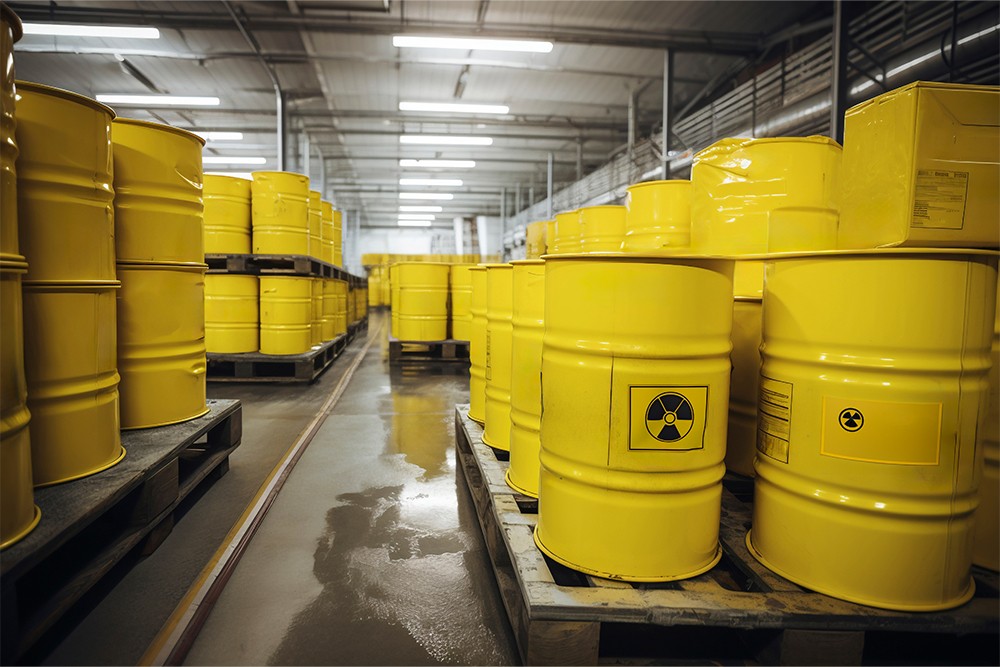
Industrial Chemical Storage Systems for Safe and Controlled Storage
Industrial chemical storage systems are controlled structures used to store flammable, combustible, corrosive, toxic or environmentally hazardous chemicals safely in factories and industrial facilities. They help separate chemicals from production areas, restrict unauthorized access and limit the spread of possible leaks.
Each system is engineered specifically according to chemical type, packaging, total inventory, incompatible chemical groups, ventilation, fire safety, spill-containment capacity, access control and indoor-outdoor conditions.
What Is an Industrial Chemical Storage System?
An industrial chemical storage system is an enclosed or semi-open steel structure used to store chemicals in drums, containers, IBC tanks, boxes or other packages safely, under control and with traceability.
Depending on project requirements, the system may include:
- Steel supporting structure
- Leak-tight floor and spill-containment sump
- Chemical-resistant surface coatings
- Natural or mechanical ventilation
- Fire-rated walls and doors
- Locked and controlled-access doors
- Racking and pallet-storage systems
- Separate acid, alkali and solvent zones
- Warning signs and color coding
- Lighting, sensors and electrical infrastructure
Advantages of Chemical Storage Systems
Separate Chemicals by Classification
Keep incompatible chemicals in separate zones and reduce mixing and reaction risks.
Limit the Spread of Leaks
Leak-tight floors, containment sumps and secondary-containment solutions restrict the spread of possible spills.
Provide Controlled Access
Locked doors, authorized entry systems and warning signs limit access to relevant personnel.
Manage Fire and Explosion Risks
Ventilation, compartmentation, suitable electrical infrastructure and fire-safety details can be applied according to chemical classification.
Simplify Inspection and Tracking
Labeled racks, compartments and defined storage zones support more organized inventory control.
Offer a Modular and Expandable Structure
New racks, compartments and storage modules can be added when inventory or chemical groups change.
Types of Chemical Storage Systems
Spill-Containment Chemical Stores
Prepared with leak-tight floors and secondary-containment capacity for liquid chemicals.
Fire-Rated Chemical Stores
Include fire-rated walls, doors and suitable ventilation for flammable and combustible substances.
Modular Chemical Stores
Made from steel modules that can be expanded, relocated or rearranged according to the facility layout.
Controlled-Access Chemical Stores
Use locks, card access, warning signs and recorded entry systems to restrict unauthorized access.
Compartmented Chemical Stores
Designed to store acids, alkalis, solvents, oils and other chemical groups in separate zones.
Racked and Palletized Chemical Stores
Provide organized storage for drums, containers, boxes and IBC tanks on suitable racking or pallet zones.
Key Design Considerations
- Chemical type and safety-data-sheet information
- Packaging type and total inventory
- Incompatible chemical groups
- Spill containment and secondary-containment capacity
- Natural or mechanical ventilation
- Fire resistance and extinguishing infrastructure
- Racking, pallet and IBC layout
- Controlled access and locking
- Electrical and lighting infrastructure
- Warning signs and color coding
- Forklift and personnel routes
- Indoor or outdoor conditions
Application Areas
- Manufacturing facilities
- Automotive and supplier industries
- Metalworking factories
- Food and beverage facilities
- Chemical and pharmaceutical plants
- Paint and coating areas
- Maintenance and technical-service departments
- Energy plants and boiler rooms
- Warehouses and logistics centers
- Organized industrial zones
Our Production and Installation Process
Each project is evaluated individually according to chemical classification, inventory and site conditions.
1. Requirements Analysis and Site Survey
Chemical types, packaging, inventory, available area, floor conditions, routes, fire infrastructure and access conditions are evaluated.
2. Layout and Safety Design
Compartments, racks, containment, ventilation, doors, escape arrangement, warning signs and access control are determined.
3. Technical Engineering and Manufacturing
The supporting structure, panels, doors, leak-tight floor, containment sump and connections are manufactured according to technical drawings.
4. Surface Treatment and Quality Inspection
Chemical-resistant coating, galvanizing or suitable surface protection is applied. Dimensions, welds, leak-tightness and installation compatibility are inspected.
5. Shipment and Site Installation
The structure, panels, doors, racks, ventilation and safety components are installed according to the project plan.
6. Final Inspection and Handover
Leak-tightness, ventilation, access control, doors, compartments, warnings and overall site compatibility are checked before handover.
Modification and Reinforcement of Existing Chemical Stores
Changes in chemical types, inventory or facility layout may require modification of existing storage systems. Corrosion, leakage, inadequate ventilation, damaged doors or insufficient compartmentation can also reduce safety.
Following a technical inspection, the following works may be carried out:
- Leak-tight floor and containment renewal
- Addition of new compartments and racks
- Ventilation-system improvement
- Installation of fire-rated panels and doors
- Addition of locks and access control
- Renewal of warning signs and color coding
- Modification of electrical and lighting infrastructure
- Replacement of corroded components
- Surface-coating renewal
Material, Panel and Surface Options
Materials and surface systems are selected according to chemical resistance, fire safety, corrosion and hygiene requirements.
Carbon-Steel Structure
Provides a durable and cost-effective solution for primary supporting systems.
Galvanized Steel
Improves corrosion resistance in humid and outdoor conditions.
Stainless Steel
Can be considered for applications requiring high chemical resistance, hygiene or frequent wash-down.
Chemical-Resistant Paint and Coating
Provides suitable surface protection against acids, alkalis, solvents and other chemical groups.
Fire-Rated Panels and Doors
Can be applied where flammable and combustible substances require fire-rated compartmentation.
Racking, Locks and Safety Equipment
Pallet and drum racks, locked doors, card readers, sensors and warning systems can be integrated.
Why Nevas Çelik?
Projects are not limited to standard storage dimensions; they are prepared according to chemical classifications, inventory, incompatibilities, spill risk, ventilation, fire safety and site conditions.
Site survey, technical design, steel fabrication, surface treatment and professional installation are managed within a single process. Compartmentation, containment, ventilation and access modifications can also be carried out on existing chemical stores.
Information Required for a Quotation
- Types of chemicals to be stored
- Safety data sheets
- Packaging type and approximate inventory
- Compatible and incompatible chemical groups
- Required dimensions and application area
- Spill-containment capacity requirements
- Ventilation and fire-safety expectations
- Rack, pallet or IBC layout
- Controlled-access requirements
- Indoor or outdoor use
- Photographs of the application area
- Installation location and work schedule
Frequently Asked Questions
Which materials are chemical stores made from?
Carbon steel, galvanized steel or stainless steel can be used for the structure, with chemical-resistant coatings and suitable panels on the surfaces.
Can different chemicals be stored in the same facility?
Only compatible chemicals should be stored together, with suitable compartmentation and safety conditions.
Can a spill-containment sump be included?
Yes. A leak-tight floor and secondary-containment sump can be designed according to stored liquid volume and packaging.
Can ventilation be added?
Yes. Natural or mechanical ventilation can be applied according to chemical classification and site conditions.
Can a chemical store be installed outdoors?
Yes. Outdoor systems can be prepared with suitable roofing, cladding, galvanizing, drainage and environmental protection.
Can an existing chemical store be modified?
Yes. Leak-tightness, compartments, racking, ventilation, doors, access control and surface coatings can be modified.
A Project-Specific Solution for Safe Chemical Storage
Technical assessment and project engineering can be provided for a storage system suited to your chemical types, inventory, site conditions and safety requirements.
You can request a quotation for a new chemical store, modification of an existing system or containment, ventilation and access improvements by sharing your project information.