 Türkçe
Crane Attachments | Industrial Lifting Equipment
Industrial Crane Attachments for Safe and Controlled Load Handling
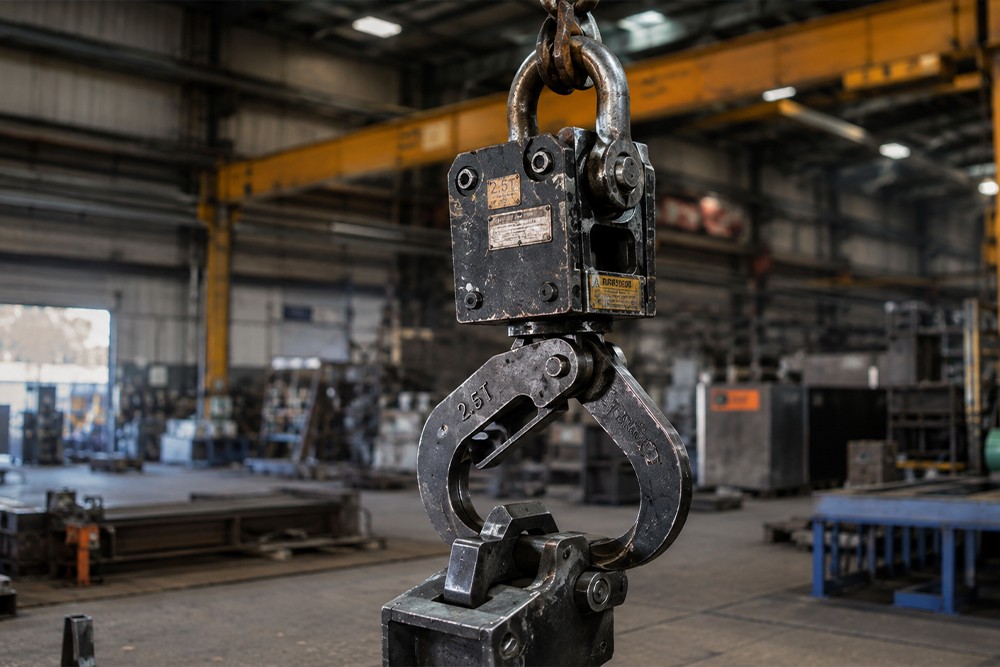
Crane attachments are custom steel devices developed for lifting, moving, rotating and positioning heavy, bulky, sensitive or specially shaped loads. They create a secure connection between the crane and the load, transfer lifting forces in a controlled manner and help maintain load stability.
Each system is engineered specifically according to load weight, dimensions, center of gravity, lifting points, crane capacity, operating scenario and site conditions.
What Is a Crane Attachment?
A crane attachment is a custom steel device positioned between the crane hook and the load to support safe lifting, movement, rotation or positioning.
Depending on project requirements, the system may include:
- Steel supporting body or frame
- Lifting eyes and lugs
- Hook and pin connections
- Connection and fixing plates
- Chain and sling connections
- Balancing elements
- Rotating and positioning components
- Adjustable connection points
- Modular extension elements
- Safety and identification plates
Advantages of Crane Attachments
Transfer Lifting Forces in a Controlled Manner
Distribute forces from the crane hook to suitable load connection points.
Improve Load Stability
Help reduce rotation and swinging of long, wide or unbalanced loads.
Protect Sensitive Loads
Limit compression, bending and deformation risks around machinery, tanks, dies and special components.
Facilitate Rotation and Positioning
Support not only lifting but also controlled orientation and placement of the load.
Reduce Operation Time
Predefined connection and lifting points shorten preparation and positioning processes.
Adapt to Different Loads
Adjustable and modular connections allow use with different dimensions, geometries and operating scenarios.
Types of Crane Attachments
Custom Lifting Attachments
Developed for loads where standard hook and sling arrangements are insufficient.
Adjustable Hook and Lug Systems
Movable connection points allow use with different load widths and dimensions.
Frame and H-Type Attachments
Balance machinery, tanks and wide equipment in two axes for four-point lifting.
Long-Load Lifting Attachments
Support the lifting of profiles, pipes, sheet bundles and long structural components with limited deflection.
Rotating and Positioning Attachments
Designed to turn, orient or precisely position loads during lifting.
Modular Crane Attachments
Use removable beams, connections and extension components to adapt to different operations.
Key Design Considerations
- Maximum working load
- Safety factor
- Center of gravity and load distribution
- Attachment span and overall geometry
- Profile sections and deflection limits
- Weld and joint details
- Lug, pin and hook capacities
- Sling and chain arrangement
- Crane-hook compatibility
- Rotation and positioning scenario
- Operating and connection access
- Corrosion and operating environment
Application Areas
- Machinery manufacturing
- Press and die systems
- CNC and machining centers
- Tanks, transformers and generators
- Pump and compressor groups
- Long profiles, pipes and sheet bundles
- Robotics and automation equipment
- Automotive and supplier industries
- Energy and heavy industry
- Logistics and special projects
Our Production Process
Each project is evaluated individually according to working load, connection geometry and operating scenario.
1. Technical Data Analysis and Site Survey
Load dimensions, total weight, center of gravity, lifting points, crane capacity and site conditions are evaluated.
2. System Design
Attachment geometry, supporting sections, lifting eyes, hooks, pins and balancing details are determined. Technical drawings are prepared.
3. Cutting, Machining and Fabrication
Profiles, plates and connection components are cut, drilled, bent and machined according to project dimensions.
4. Fixturing, Welding and Inspection
Components are assembled in suitable fixtures. The welding sequence is planned to reduce deformation, and flatness, connection centers and main geometry are inspected.
5. Surface Treatment and Trial Inspection
Blasting, primer, electrostatic powder coating, wet paint or galvanizing is applied. Connections, pins and attachment movement are checked where required.
6. Shipment and Site Application
The attachment is delivered, connected and used for lifting, rotation and positioning before final inspection.
Crane Attachment Modification and Reinforcement
Existing crane attachments may develop cracks, weld damage, corrosion, deflection, lug wear or loose connections over time. A change in handled load or increased capacity may also require reevaluation.
Following a technical inspection, the following works may be carried out:
- Supporting-body and profile reinforcement
- Lifting-eye and lug renewal
- Pin and hook replacement
- Weld repair
- Attachment-span modification
- Addition of adjustable connection points
- Renewal of rotating components
- Addition of modular extension elements
- Renewal of capacity and identification plates
- Surface-coating renewal
Material and Surface Options
Material and surface treatment are selected according to working load, frequency of use and operating environment.
Carbon-Steel Profiles
Provide high strength and cost-effective production for general industrial lifting applications.
Plate and Bent-Sheet Components
Used for reinforcement plates, connection lugs, gussets and special joints.
Stainless Steel
Can be considered for applications requiring hygiene, chemical resistance or high corrosion protection.
Pins, Lugs and Hook Systems
Selected according to capacity and connection geometry and can be used in movable or removable assemblies.
Electrostatic Powder and Wet Paint
Provide durable surfaces suited to indoor and site operating conditions.
Hot-Dip Galvanizing
Provides long-term protection in humid, outdoor or highly corrosive environments.
Why Nevas Çelik?
Projects are not limited to standard attachment dimensions; they are prepared according to actual tonnage, geometry, center of gravity, connection points and operating conditions.
Site survey, technical design, steel fabrication, surface treatment, inspection and site support are managed within a single process. In addition to new production, reinforcement, connection renewal and dimensional modification of existing attachments can also be carried out.
Information Required for a Quotation
- General load dimensions
- Total weight and center of gravity
- Technical drawing or 3D model, if available
- Upper and lower lifting points
- Dimensions of connection lugs
- Crane and hook information
- Sling, chain or rope arrangement
- Rotation or positioning requirements
- Fixed, adjustable or modular preference
- Operating environment and surface preference
- Use and delivery location
Frequently Asked Questions
Are crane attachments manufactured in standard dimensions?
No. They are engineered specifically according to load dimensions, center of gravity, connection points and operating scenario.
Can attachments be manufactured for very high-tonnage loads?
Yes. Reinforced profiles, plates and connection components can be used according to static and dynamic effects.
Can rotating or positioning attachments be manufactured?
Yes. Custom connection and balancing systems can be designed for controlled rotation or precise placement.
Can an existing crane attachment be reinforced?
Yes. Supporting bodies, lugs, connection plates, weld areas and pins can be renewed or reinforced following technical inspection.
Can adjustable attachments be manufactured?
Yes. Movable hooks, lugs or connection points can be used to accommodate different spans.
Do you provide site support?
Yes. Connection, lifting, rotation, positioning and final inspections can be included in the project scope.
A Project-Specific Solution for Safe Crane Operations
Technical assessment and project engineering can be provided for a crane attachment suited to load tonnage, geometry and operating requirements.
You can request a quotation for new production, reinforcement of an existing system or a rotating and positioning solution by sharing your project information.