 Türkçe
Custom-Made Equipment | Industrial Support Systems
Custom-Built Equipment Tailored to Production Processes
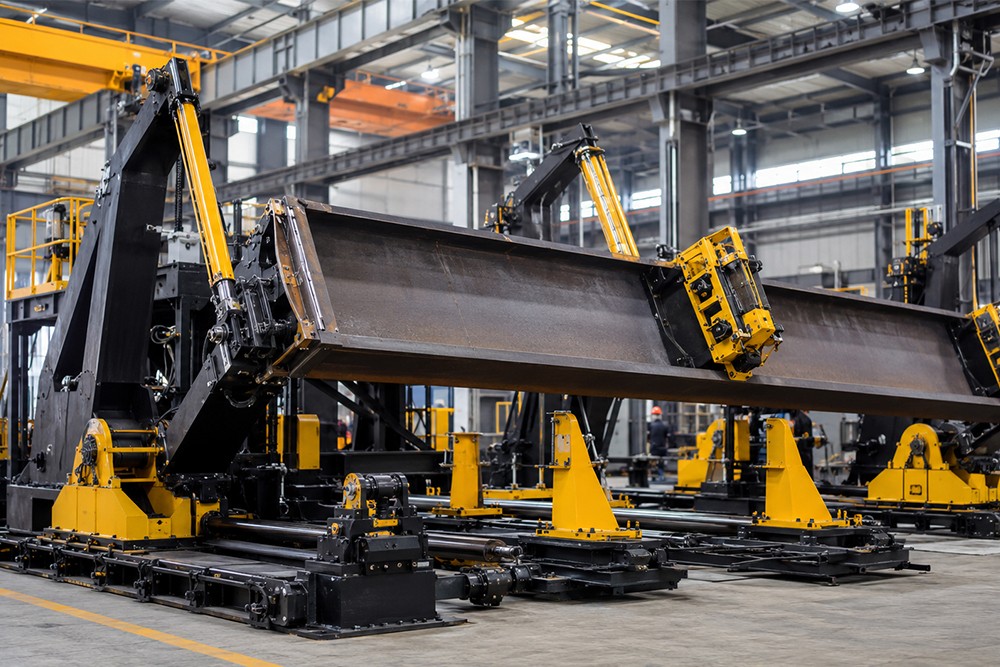
Custom-built production equipment consists of project-specific mechanical or electromechanical systems developed for manufacturing, assembly, handling, transfer, maintenance, testing and inspection requirements that standard solutions cannot meet. The main machine, operator, product geometry and facility layout are evaluated together to support safer, more organized and repeatable operations.
Each system is engineered specifically according to product dimensions, center of gravity, load capacity, cycle time, working height, connection points, movement mechanism, maintenance access and site conditions.
What Is Custom-Built Production Equipment?
Custom-built production equipment is an auxiliary system designed for a specific manufacturing or operational requirement, with its dimensions, capacity, connections and operating principle determined according to actual site conditions.
Depending on project requirements, the system may include:
- Steel-profile or sheet-metal supporting structure
- Machined tables and connection plates
- Rollers, rails, wheels or rotary mechanisms
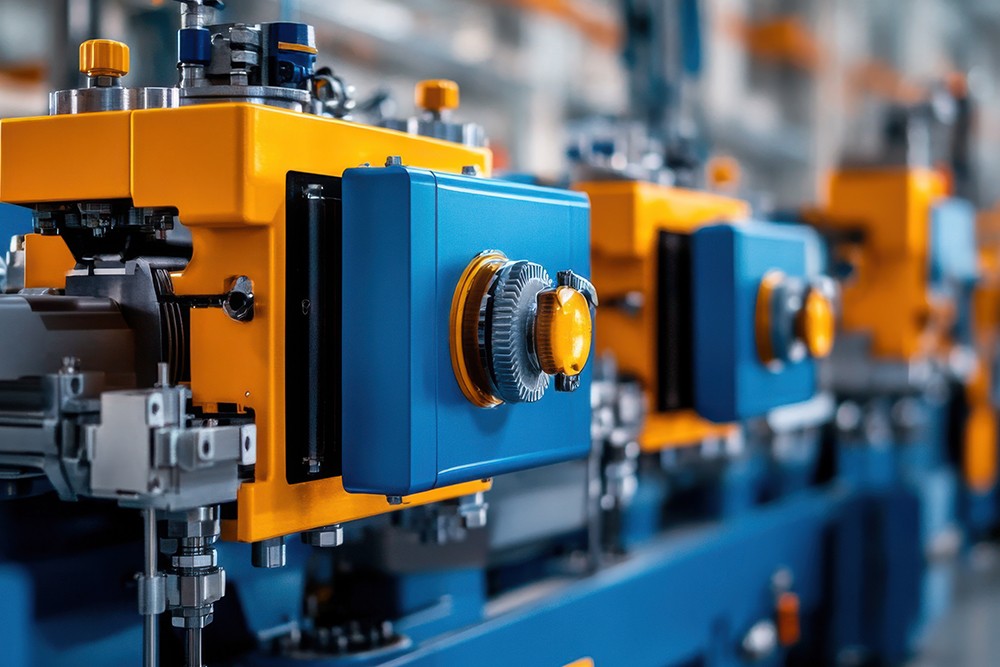
- Mechanical, pneumatic or electromechanical movement systems
- Locating pins, stops and locks
- Forklift pockets and lifting lugs
- Protective guards and safety panels
- Sensors, switches and control components
- Anti-slip working surfaces
- Modular and removable connections
Advantages of Custom-Built Production Equipment
Fit the Process Precisely
The system integrates directly into the production flow because it is designed according to product dimensions, operation sequence, capacity and site layout.
Support Cycle-Time Improvement
Organize feeding, handling, positioning and processing steps to help reduce waiting and repeated movement.
Improve Ergonomics
Working height, reaching distance, grip points and operator movements are considered for more controlled use.
Improve Occupational Safety
Protective panels, mechanical locks, anti-slip surfaces and safe handling points help reduce operational risks.
Strengthen Production Repeatability
Fixtures, stops and positioning elements help ensure parts are processed against the same references in every cycle.
Offer a Modular and Upgradeable Structure
The equipment can be extended, reinforced or reconfigured when the product, capacity or line layout changes.
Types of Custom-Built Production Equipment
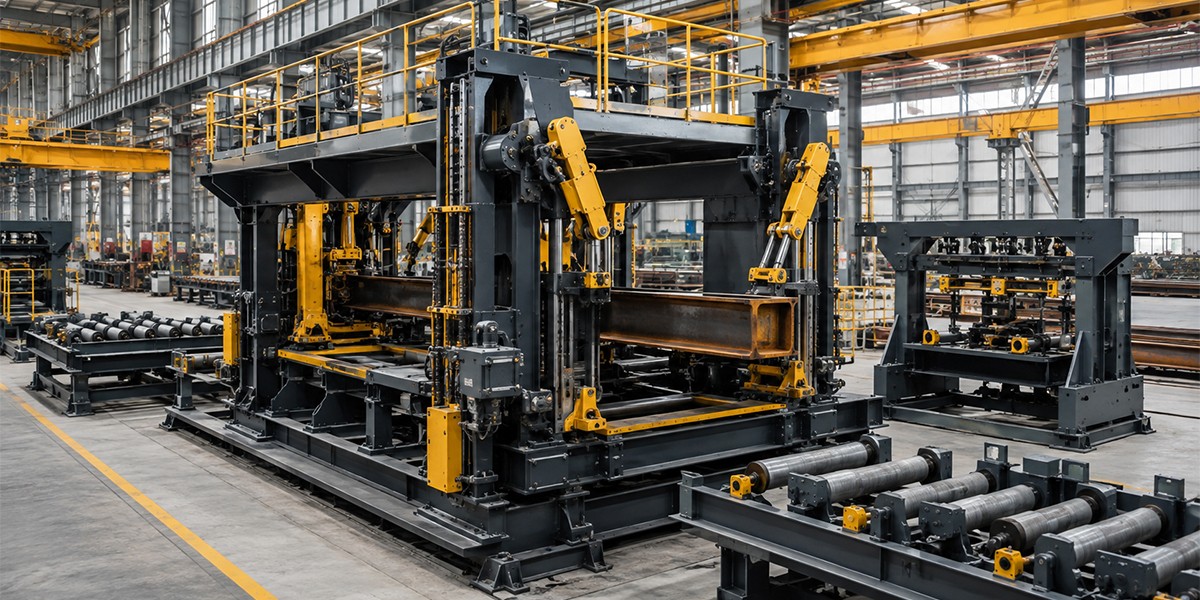
Assembly and Welding Fixtures
Support accurate locating, repeatable assembly and controlled welding of parts.
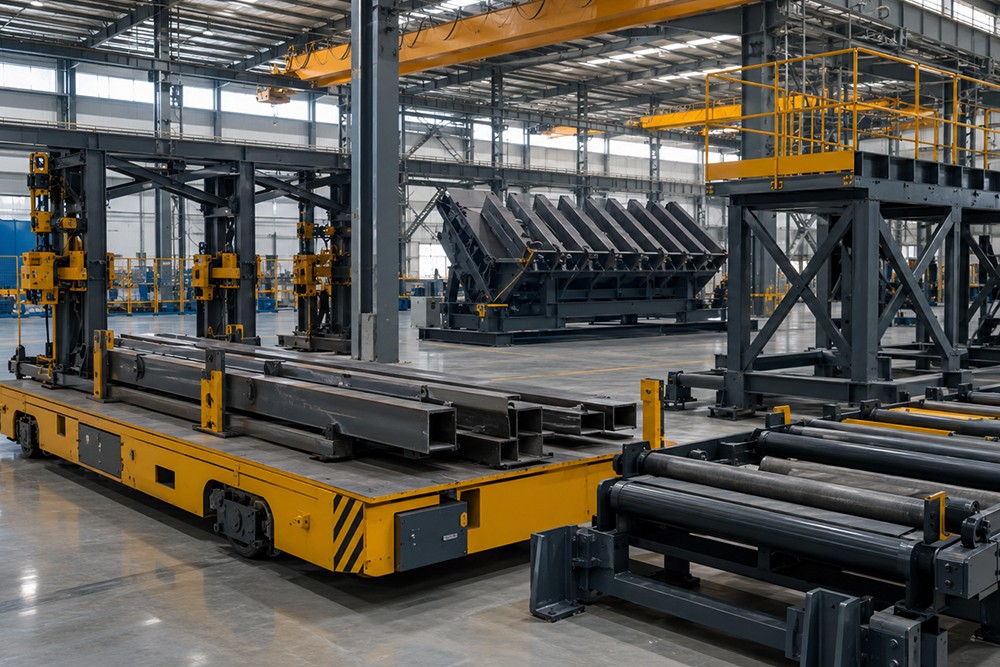
Handling and Transfer Carts
Developed for safe internal movement of parts, dies, tools and semi-finished products.
Operator Workstations
Bring equipment, tools and parts together in an accessible layout for assembly and inspection operations.
Service and Maintenance Platforms
Provide safe access to machinery using stairs, guardrails and anti-slip flooring.
Part Feeding and Guidance Systems
Support movement of products to the processing point in the correct sequence, direction and speed.
Testing, Inspection and Special-Process Equipment
Engineered for measurement, leak testing, functional checks, clamping, rotating, lifting or pressing requirements.
Key Design Considerations
- Product and part geometry
- Total load and center of gravity
- Operation sequence and cycle time
- Load capacity and dynamic forces
- Ergonomics and working height
- Datum and connection points
- Movement and transfer mechanism
- Operator and maintenance access
- Occupational-safety components
- Floor and facility layout
- Cleaning and maintenance conditions
- Material and surface requirements
Application Areas
- Automotive and supplier industries
- Machinery manufacturing
- Metalworking facilities
- Food and packaging industries
- Plastic and rubber production
- Energy and pump systems
- Robotics and automation lines
- Logistics and warehousing
- Maintenance and technical-service areas
- Defense and special projects
Our Production Process
Each project is evaluated individually according to product, process, capacity and site conditions.
1. Requirements and Process Analysis
Product characteristics, operation steps, capacity, cycle time, operator movements and site conditions are evaluated.
2. Concept and System Design
Operating principle, general layout, movement mechanism, connections, safety details and maintenance access are determined.
3. Technical Engineering and Manufacturing
Steel structures, sheet-metal parts, machined components and connections are produced according to technical drawings.
4. Mechanical Assembly and Surface Treatment
Rollers, wheels, rails, locks, pneumatic components and protective elements are installed, and the appropriate surface treatment is applied.
5. Functional, Dimensional and Safety Inspection
Movement, locking, load capacity, datum points, dimensions and safety details are checked.
6. Trial, Shipment and Commissioning
Trials are completed with actual or representative parts, and the system is delivered, positioned, adjusted, tested and handed over at the site.
Modification and Development of Existing Equipment
Insufficient capacity, deformation, wheel or rail wear, locking problems, ergonomic issues or product changes may create a need to modify existing auxiliary equipment.
Following a technical inspection, the following works may be carried out:
- Reinforcement of the supporting structure
- Dimensional and capacity modification
- Renewal of wheels, rails and roller systems
- Addition of new stops, locks and restraint components
- Installation of protective panels and safety elements
- Addition of forklift pockets or lifting lugs
- Improvement of ergonomics and working height
- Pneumatic or sensor integration
- Surface-coating renewal
Material and Surface Options
Materials and surface systems are selected according to load, operating environment, hygiene, corrosion and usage intensity.
Carbon-Steel Profiles
Provide high strength, weldability and cost-effective production for general industrial applications.
Plate and Bent-Sheet Components
Used for tables, covers, protective panels, connection plates and custom body parts.
Stainless Steel
Can be selected for food, chemical, humid and hygiene-sensitive applications.
Aluminum Profiles and Lightweight Components
Can be considered for systems requiring low weight, modularity and fast assembly.
Electrostatic Powder and Wet Paint
Provide durable surfaces for indoor applications and corporate color requirements.
Galvanizing and Special Coatings
Provide long-term protection in humid, outdoor or highly corrosive environments.
Why Nevas Çelik?
Projects are not limited to ready-made templates; they are prepared according to actual product geometry, process, capacity, cycle time, ergonomics, safety and site conditions.
Concept development, technical design, steel fabrication, mechanical assembly, surface treatment, functional inspection and site commissioning are managed within a single process. Capacity, movement, dimensional, safety and ergonomic modifications can also be carried out on existing equipment.
Information Required for a Quotation
- Intended operation and use of the equipment
- Dimensions and weight of the part to be handled or processed
- Technical drawing or 3D model, if available
- Target capacity and cycle time
- Number of operators and working direction
- Available site dimensions
- Fixed, mobile or modular-use preference
- Wheel, rail, forklift-pocket or lifting-lug requirements
- Electrical, pneumatic or sensor integration
- Preferred material and surface treatment
- Installation and delivery location
- Photographs, videos and dimensions for modification projects
Frequently Asked Questions
Which materials are custom-built production systems made from?
Depending on the application, carbon-steel profiles, sheet metal, stainless steel, aluminum and various mechanical components can be used.
Are the systems manufactured in standard dimensions?
No. They are prepared specifically according to product dimensions, capacity, operation, ergonomics and site conditions.
Can handling equipment be manufactured for heavy parts?
Yes. Reinforced structures, heavy-duty wheels, rails and lifting points can be designed according to static and dynamic loads.
Can pneumatic or sensor-equipped systems be manufactured?
Yes. Pneumatic movement, limit sensors, safety switches and similar components can be integrated into the mechanical design.
Can stainless-steel equipment be manufactured?
Yes. Stainless-steel options can be evaluated according to hygiene, humidity and corrosion requirements.
Can existing equipment be modified?
Yes. Structural reinforcement, dimensional changes, movement-system renewal, protective panels and surface modifications can be applied.
A Project-Specific Equipment Solution for Your Production Process
Technical assessment and project engineering can be provided for custom-built equipment suited to your product, process, capacity and site conditions.
You can request a quotation for new equipment, modification of an existing system or movement, safety, capacity and ergonomic improvements by sharing your project information.