 Türkçe
Non-Slip Platforms | Industrial Safe Working Platforms
Industrial Anti-Slip Platforms for Safe and Controlled Access
Anti-slip platforms are steel structures that enable personnel to move and work safely around factories, production lines, tanks, machinery and technical areas. Their anti-slip surfaces, guardrails, stairs and access components are planned together to create safer maintenance and operating conditions.
Each system is engineered specifically according to platform dimensions, load capacity, frequency of use, surface conditions and access requirements.
What Is an Anti-Slip Platform?
An anti-slip platform is an elevated steel working system that enables personnel to reach high or difficult-access areas safely and work in a stable position.
Depending on project requirements, the system may include:
- Steel supporting profiles
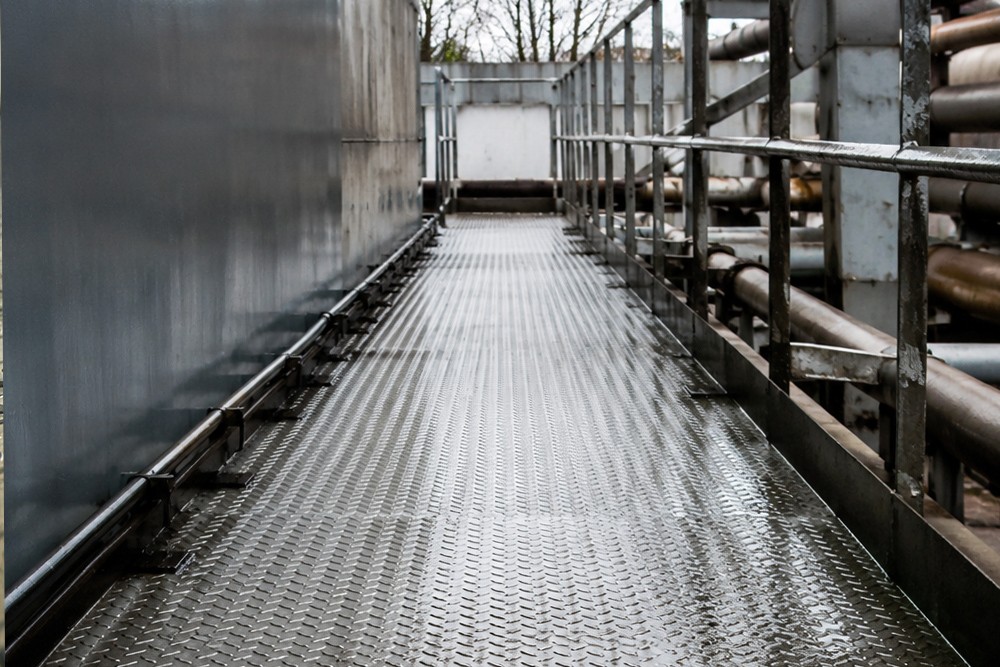
- Grating, chequered plate or perforated anti-slip surfaces
- Supporting beams and columns
- Guardrails and handrails
- Toe boards
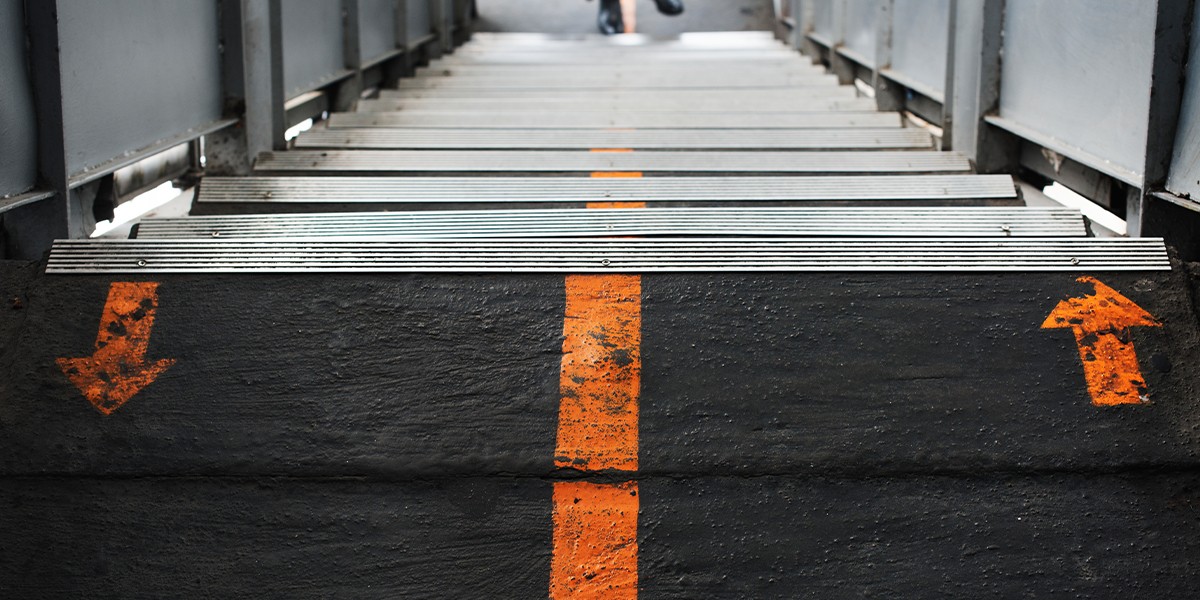
- Access stairs
- Access gates
- Base plates and anchoring elements
- Modular connection components
Advantages of Anti-Slip Platforms
Help Reduce Slip Risks
Grating, chequered or embossed surfaces provide improved grip.
Create a Safe Working Area
Provide a stable working area around machinery, tanks, lines and technical equipment.
Limit the Accumulation of Liquids and Dirt
Grating and perforated surfaces reduce the accumulation of water, oil, dust and small particles.
Facilitate Maintenance and Operating Access
Help technical personnel reach equipment in a controlled and ergonomic manner.
Offer a Modular and Expandable Structure
Platforms can be extended, modified or adapted to a different location when the facility layout changes.
Can Be Installed in Existing Facilities
Can be retrofitted to active production areas using suitable connection and installation details.
Types of Anti-Slip Platforms
Grating Platforms
Open-surface systems that provide drainage and airflow. They are preferred in wet and oily areas.
Chequered Plate Platforms
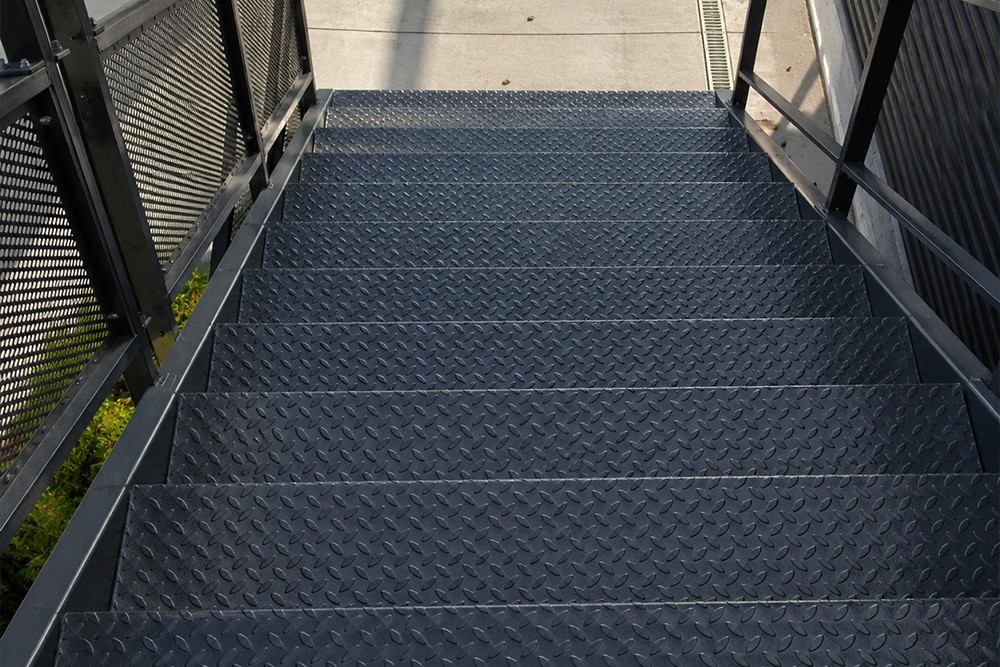
Used in high-traffic areas requiring a closed and durable working surface.
Perforated Anti-Slip Platforms
Used where high grip and liquid drainage are required together.
Machinery Maintenance Platforms
Create a safe working area for maintenance and inspection above machinery and production lines.
Operator Platforms
Allow operators to control and operate machinery from a suitable working height.
Tank and Silo Platforms
Provide surrounding access for filling, inspection, sampling and maintenance operations.
Key Design Considerations
- Personnel and equipment loads
- Platform dimensions and height
- Surface type and anti-slip requirements
- Supporting spans
- Beam, column and cantilever sections
- Guardrail and toe-board requirements
- Stair and access direction
- Vibration and machinery effects
- Drainage and cleaning requirements
- Floor and connection points
- Corrosion and outdoor conditions
- Maintenance and emergency access
Application Areas
- Manufacturing facilities
- Automotive and supplier industries
- Metalworking factories
- Food and packaging plants
- Chemical and energy facilities
- Warehouses and logistics centers
- Water-treatment plants
- Roofs and technical areas
- Tank and silo surroundings
- Machinery and maintenance areas
Our Production Process
Each project is evaluated individually according to its intended use, design loads and site conditions.
1. Technical Assessment and Site Survey
Machinery layout, elevations, supporting points, access routes and installation areas are evaluated on site.
2. System Design
Supporting sections, platform surface, guardrails, stairs and connection details are determined. Technical drawings are prepared.
3. Manufacturing
Profiles, plates, gratings and connection components are cut, machined and welded according to project dimensions.
4. Surface Treatment and Inspection
Electrostatic powder coating, galvanizing or protective coating is applied. Dimensions, welds, surfaces and module compatibility are inspected.
5. Shipment and Site Installation
Platform modules are delivered to the site, connected to the supporting structure, aligned and anchored.
6. Final Inspection and Handover
System stability, access areas, guardrails, stairs and connections are checked before handover.
Anti-Slip Platform Modification and Reinforcement
Existing platforms may develop surface wear, loose connections, corrosion, deformation or guardrail damage over time.
Following a technical inspection, the following works may be carried out:
- Platform-surface replacement
- Structural reinforcement
- Addition of guardrails and toe boards
- Stair and access modification
- Anchor and connection renewal
- Platform extension
- Addition of new maintenance areas
- Surface-coating renewal
Material and Surface Options
Material and surface treatment are selected according to load capacity, anti-slip requirements and the operating environment.
Steel Supporting Profiles
Form the main supporting structure of the platform. Sections are selected according to load and span.
Galvanized Steel Grating
Used in industrial areas requiring drainage, airflow and anti-slip performance.
Chequered Plate
Preferred where a closed, robust and slip-resistant working surface is required.
Perforated or Embossed Plate
Used in special applications requiring high grip and liquid drainage.
Hot-Dip Galvanizing
Provides long-term corrosion protection in outdoor and humid environments.
Stainless Steel
Can be considered in areas requiring hygiene, wash-down resistance and high corrosion protection.
Why Nevas Çelik?
Projects are not limited to standard dimensions; they are prepared according to design loads, site geometry and safety requirements.
Site survey, design, steel fabrication, surface treatment and site installation are managed within a single process. Modular solutions also allow platform systems to adapt to future production and layout changes.
Information Required for a Quotation
- Photographs of the application area
- Approximate platform dimensions and height
- Personnel and equipment loads
- Preferred surface type
- Guardrail and toe-board requirements
- Stair or access direction
- Existing supporting-structure information
- Indoor or outdoor use
- Preferred surface treatment
- Installation location
Frequently Asked Questions
Are anti-slip platforms manufactured in standard dimensions?
No. Platform dimensions, load capacity, surface type and access details are engineered specifically for the project.
Which surface options can be used?
Galvanized grating, chequered plate, perforated or embossed anti-slip steel surfaces can be applied.
Can guardrails and stairs be added?
Yes. The platform system can be completed with guardrails, toe boards, stairs and access gates.
Can they be used outdoors?
Yes. Galvanizing or suitable protective coatings can be applied for outdoor conditions.
Can an existing platform be modified?
Yes. Platform surfaces, guardrails, stairs, connections and supporting structures can be renewed or reinforced.
Do you provide installation services?
Yes. Shipment, installation, anchoring, alignment and final inspections can be included in the project scope.
A Project-Specific Solution for Safe Access
Technical assessment and project engineering can be provided for an anti-slip platform system suited to the design loads, site dimensions and operating conditions.
You can request a quotation for a new installation, an existing-platform modification or an expansion by sharing your project information.