0236 237 70 71
info@nevasinsaat.com
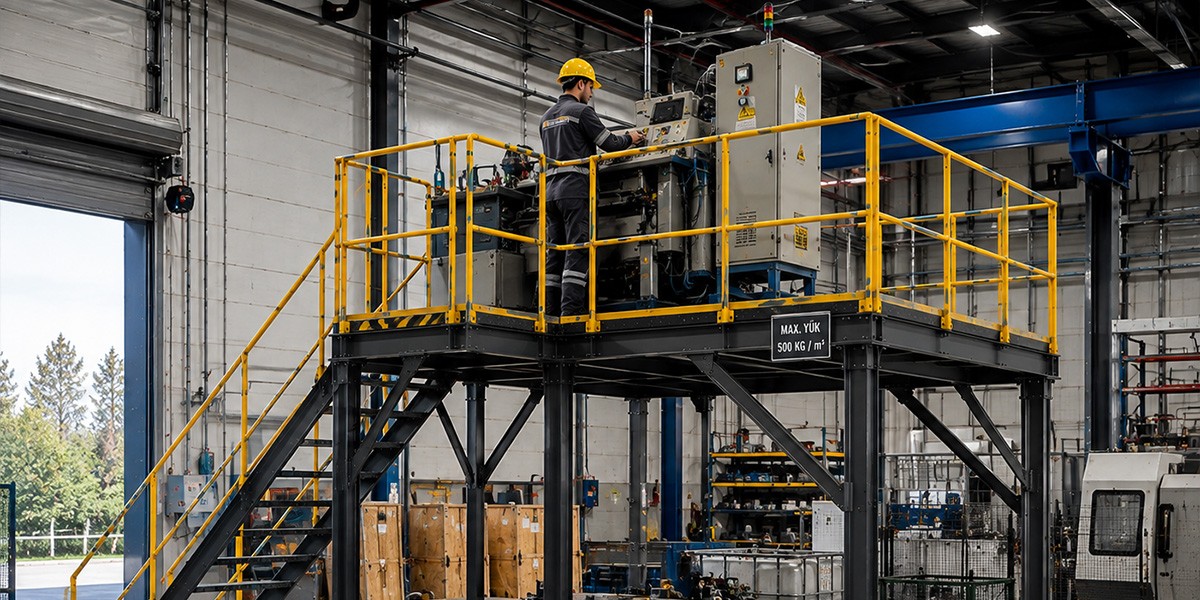
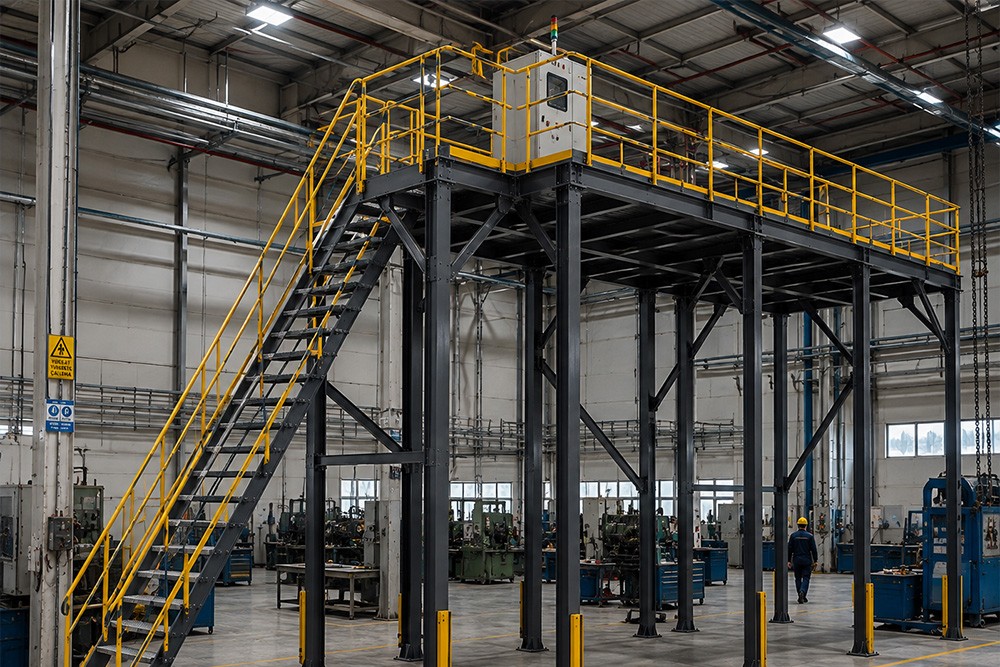
Operator platforms are steel structures that provide safe and ergonomic access to machinery, production lines, control panels and process equipment. Suitable working elevation, anti-slip flooring, stairs and guardrails help production, inspection, maintenance and intervention tasks be carried out in a more organized manner.
Each platform is engineered specifically according to working height, number of users, equipment loads, access direction, machine layout, service clearances, floor conditions and operating scenario.
An operator platform is a fixed, mobile or modular steel system that provides a safe working surface at a defined elevation and enables controlled access to machinery or equipment.
Depending on project requirements, the system may include:
Create a regular access area for elevated or difficult-to-reach control and working points.
Support safer use through anti-slip flooring, guardrails, toe boards and suitable stair geometry.
Working height and reach distance are determined to provide controlled access to machinery.
Help organize control-panel operation, feeding, sampling, cleaning and process-monitoring activities.
Planned service areas and equipment clearances allow maintenance teams to work safely.
Platforms can be expanded, relocated or reconfigured when facility layout or working elevation changes.
Anchored to the floor for continuous use at a defined working point.
Can be moved between different working points using heavy-duty wheels, brakes and forklift pockets where required.
Bolted connections simplify shipment, installation, expansion and modification.
Create working areas suited to production, assembly, inspection and intervention points.
Provide access to inspection, cleaning and maintenance points above or beside machinery.
Developed specifically where standard dimensions, elevations or access arrangements are insufficient.
Each project is evaluated individually according to working scenario, access height and site conditions.
Intended use, working elevation, number of users, equipment layout, floor, access routes and maintenance points are examined.
Platform dimensions, stair direction, guardrails, gates, flooring and supporting-leg layout are determined.
Supporting sections, flooring, stairs, guardrails, base plates and connections are manufactured according to technical drawings.
Electrostatic powder coating, wet paint, galvanizing or suitable protective coating is applied. Dimensions, welds, geometry and connections are inspected.
Platform modules are checked in the workshop; positioning, alignment, anchoring and installation are completed on site.
Stairs, guardrails, gates, platform surface, stability and site compatibility are checked before handover.
Corrosion, surface wear, loose connections, damaged guardrails, inadequate access or changes to production lines may require existing platforms to be modified.
Following a technical inspection, the following works may be carried out:
Materials and equipment are selected according to load capacity, operating environment, slip resistance, corrosion and usage intensity.
Provide high strength and cost-effective production for the main structure, legs, stairs and guardrails.
Offer different platform surfaces according to slip resistance, drainage and cleaning requirements.
Can be considered for applications requiring hygiene, frequent cleaning, humidity resistance or high corrosion protection.
Provide durable, cleanable indoor surfaces compatible with corporate colors.
Provides long-term corrosion protection in outdoor and humid environments.
Access gates, braked wheels, adjustable feet, forklift pockets and lifting lugs can be included.
Projects are not limited to standard platform dimensions; working height, user load, machine layout, access direction, maintenance clearances and site conditions are evaluated together.
Site survey, technical design, steel fabrication, surface treatment and professional installation are managed within a single process. Reinforcement, expansion, stair, guardrail, flooring and anchoring modifications can also be carried out on existing operator platforms.
No. Platform dimensions, working elevation, user load, access direction and site conditions are evaluated specifically for each project.
Yes. Floor-anchored fixed platforms or wheeled, braked and mobile systems can be manufactured.
Yes. Stairs, landings, guardrails, toe boards and access gates can be designed as part of the project.
Yes. Chequered plate, perforated sheet or steel grating can be selected according to the operating environment.
Yes. Structural sections, flooring, stairs, guardrails, base plates and anchors can be modified following technical inspection.
Yes. Stainless-steel solutions can be prepared according to hygiene, humidity and corrosion requirements.
Technical assessment and project engineering can be provided for an operator platform suited to your working elevation, machine layout, access requirements and site conditions.
You can request a quotation for a new platform, reinforcement of an existing system or stair, guardrail, flooring, mobility and anchoring modifications by sharing your project information.
 Türkçe