 Türkçe
Robot Safety Cages | Industrial Machine Safety
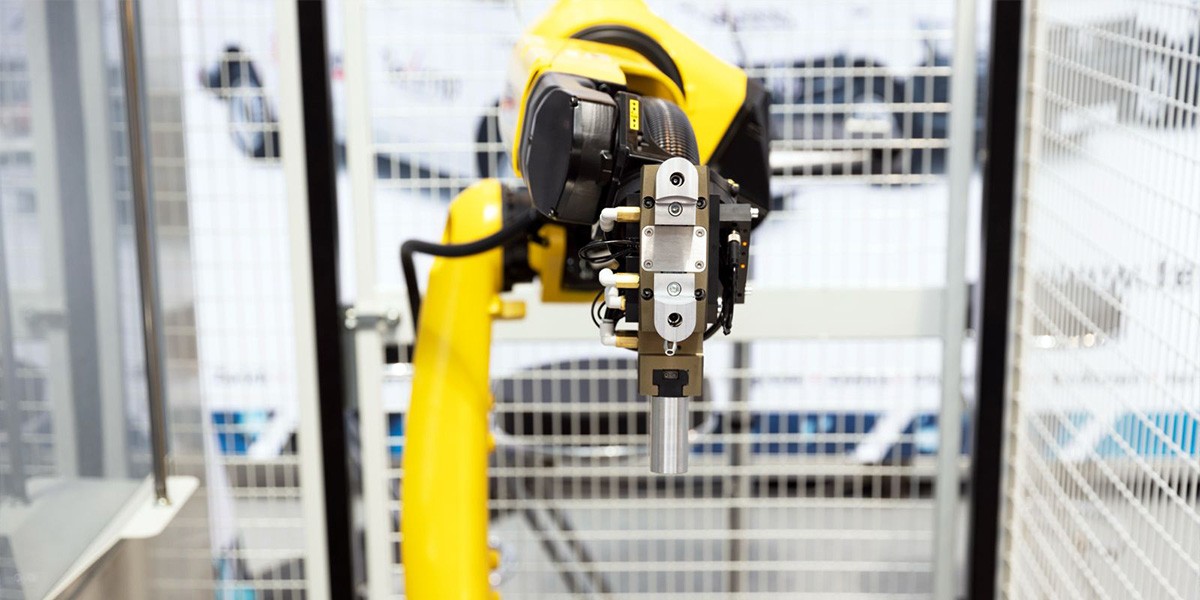
Industrial Robot Safety Fencing for Safer Production Areas
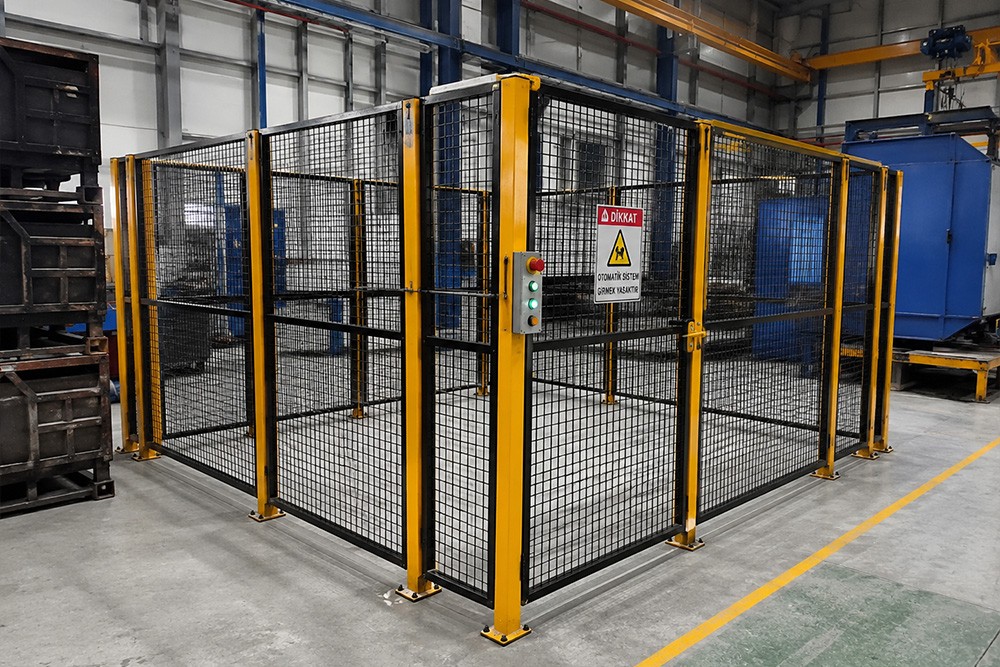
Robot safety fencing consists of steel guarding systems that physically separate the operating zones of robotic cells, presses, CNC machines, conveyors and automation equipment. It limits uncontrolled access to moving and hazardous areas, organizes maintenance entry and makes production safety boundaries clearly visible.
Each system is engineered specifically according to machine operating space, robot reach, hazardous movements, safe approach distance, maintenance requirements, material entry-exit points, door and interlocking arrangement, floor conditions and facility layout.
What Is Robot Safety Fencing?
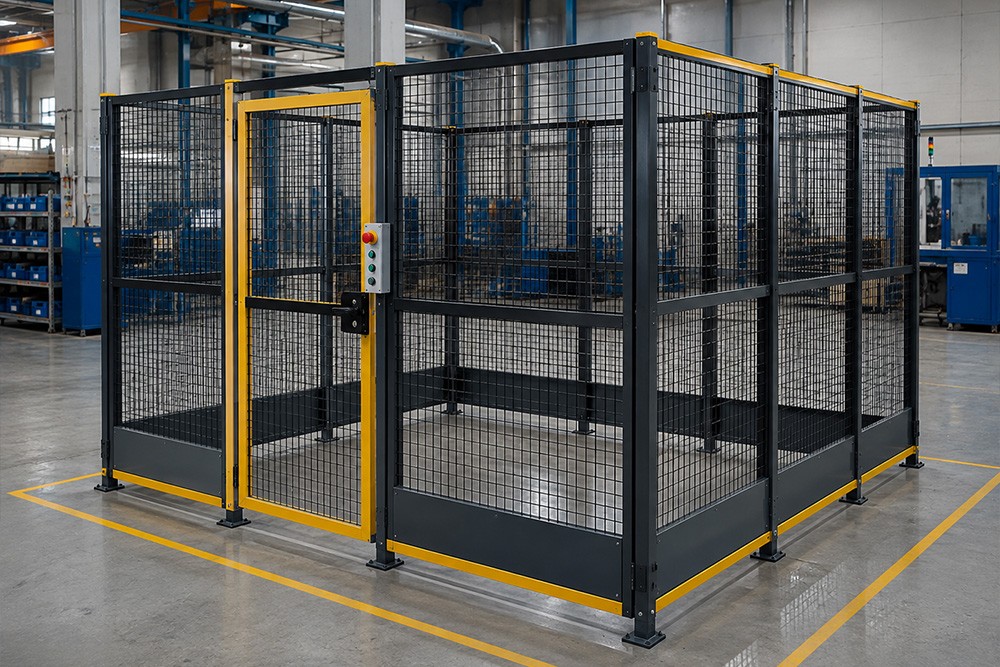
Robot safety fencing is a modular steel guarding system that creates a controlled safety boundary around machinery and automation equipment.
Depending on project requirements, the system may include:
- Steel-profile supporting posts
- Wire-mesh or welded-wire panels
- Solid-sheet, perforated-sheet or transparent surfaces
- Profile frames
- Lockable service and maintenance doors
- Safety switches and sensors
- Electromechanical interlocks
- Removable panels and access modules
- Base plates and anchors
- Cable, piping and material-passage details
Advantages of Robot Safety Fencing
Define Hazardous Machine Areas
Create a controlled boundary by limiting unintended approach to moving, rotating or high-speed equipment.
Prevent Unauthorized Access
Support access by authorized personnel only through lockable and controlled doors.
Organize Maintenance and Service
Planned doors, removable panels and service openings support controlled maintenance work.
Keep Machine Operations Visible
Wire-mesh panels or transparent surfaces allow operators to observe the process from outside the guarded area.
Integrate with Safety Equipment
Can work with safety switches, electromechanical interlocks, light curtains, sensors and emergency-stop systems.
Offer a Modular and Upgradeable Structure
Panels, doors and posts can be rearranged when machinery or line layouts change.
Types of Robot Safety Fencing
Wire-Mesh Machine Guarding
Modular fencing that preserves visibility while restricting physical access.
Profile-Frame Guarding Systems
Prepared with rigid profile frames for applications requiring greater strength or custom dimensions.
Solid-Sheet Machine Enclosures
Provide closed-surface protection where flying parts, sparks, chips or fluid splash may occur.
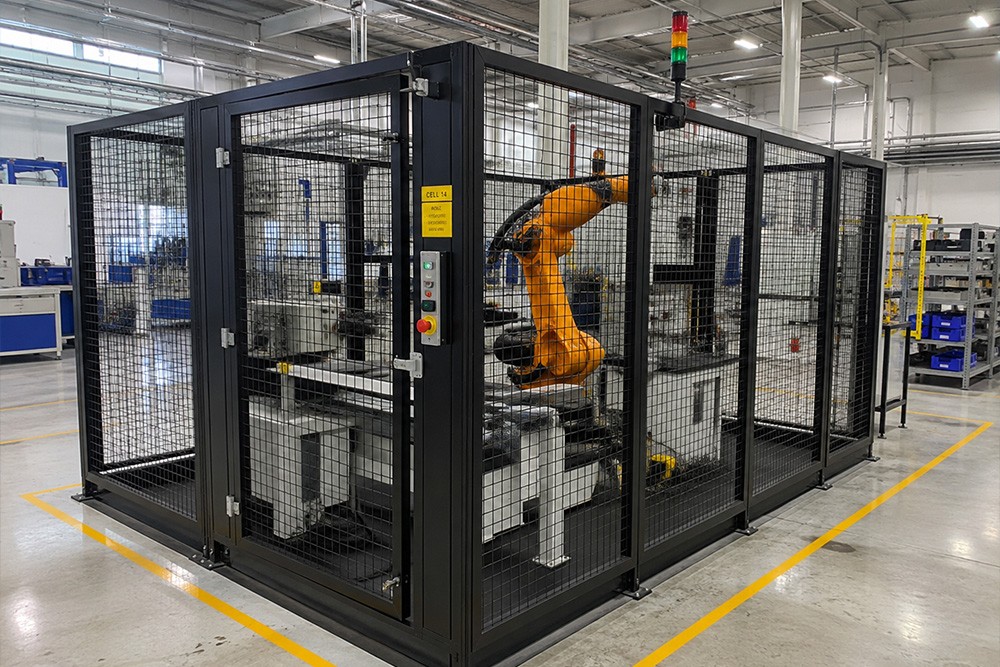
Robotic Cell Enclosures
Define the robot reach area and can be integrated with interlocked doors and automation safety.
Conveyor and Transfer-Line Guards
Restrict access to hazardous belt, chain, roller and transfer points.
Modular and Removable Systems
Panel systems that can be modified, relocated or expanded when facility layouts change.
Key Design Considerations
- Machine risk and movement analysis
- Robot reach envelope
- Safe approach distance
- Panel height and openings
- Service and maintenance access
- Material entry and exit points
- Door type and interlocking system
- Operator visibility requirements
- Cable, piping and utility passages
- Floor and anchoring conditions
- Sensor and automation integration
- Future modification requirements
Application Areas
- Robotic welding cells
- Press and die areas
- CNC and machining equipment
- Conveyor and transfer lines
- Assembly and testing stations
- Packaging and automation machinery
- Automotive and supplier industries
- Metalworking facilities
- White-goods and electronics production
- Food and packaging lines
Our Production and Installation Process
Each project is evaluated individually according to machine risk, access requirements and site conditions.
1. Requirements Analysis and Site Survey
Machine type, operating space, hazardous movements, operator access, maintenance points, floor and surrounding equipment are examined.
2. Safety and Layout Design
Fence boundaries, panel height, doors, material passages, sensors and safe-access points are determined.
3. Technical Engineering and Manufacturing
Posts, panels, doors, base plates, connections and custom passage components are manufactured according to technical drawings.
4. Surface Treatment and Quality Inspection
Electrostatic powder coating, wet paint, galvanizing or suitable protective coating is applied. Dimensions, welds, doors and connections are inspected.
5. Site Installation and Integration
Posts and panels are anchored; doors, locks, sensors and project-scope control connections are installed.
6. Functional Inspection and Handover
Door movement, interlocking functions, panel stability, access openings and overall site compatibility are checked before handover.
Modification and Development of Existing Robot Safety Fencing
Changes in machine layout, additional equipment, inadequate maintenance access or damaged panels may create a need to modify existing guarding systems.
Following a technical inspection, the following works may be carried out:
- Relocation of panels and posts
- Expansion or reduction of the enclosure
- Addition of new service doors
- Renewal of locks and safety switches
- Modification of material entry-exit openings
- Replacement of damaged panels and connections
- Reinforcement of base plates and anchors
- Addition of solid or transparent surfaces
- Improvement of sensor and automation connections
Material, Surface and Equipment Options
Materials and equipment are selected according to risk type, visibility, access control, operating environment and facility standards.
Steel Profiles and Panel Systems
Different structural sections and mesh sizes can be used for posts, frames and modular panels.
Wire-Mesh and Welded-Wire Panels
Restrict physical access while maintaining machine visibility.
Solid Sheet, Perforated Sheet and Transparent Surfaces
Can be used according to risks from flying parts, chips, sparks or fluid splash.
Door and Interlocking Equipment
Manual locks, safety switches, electromechanical interlocks and controlled-access options can be integrated.
Electrostatic Powder Coating and Galvanizing
Provide durable and visible indoor surfaces and higher corrosion resistance in humid or outdoor conditions.
Anchoring and Connection Components
Suitable base plates and mechanical or chemical anchors are selected according to floor conditions and system height.
Why Nevas Çelik?
Projects are not limited to standard panel dimensions; actual machine movement, risk points, maintenance access, material flow, interlocking requirements and facility layout are evaluated together.
Site survey, technical design, steel fabrication, surface treatment, installation and safety-equipment integration are managed within a single process. Work in active facilities can be phased during off-shift hours or planned shutdowns.
Information Required for a Quotation
- Type of machine or robot to be guarded
- Approximate machine dimensions and operating space
- Photographs and videos of the application area
- Layout plan or 3D model, if available
- Required total fence length and height
- Service and maintenance-door requirements
- Material entry-exit points
- Sensor and interlocking preferences
- Panel type and visibility requirements
- Floor and anchoring information
- Preferred color and surface treatment
- Suitable installation dates
Frequently Asked Questions
Why is robot safety fencing required?
It limits uncontrolled access to moving and hazardous machine areas and helps create a safer working environment.
Are the systems manufactured in standard dimensions?
No. They are designed specifically according to machine dimensions, operating envelope, maintenance requirements and facility layout.
Can the system be applied to robotic cells?
Yes. A custom enclosure can be designed according to robot reach, door locations and automation safety requirements.
Which panel options are available?
Wire mesh, welded-wire panels, perforated sheet, solid sheet and project-specific transparent surfaces can be used.
Can an interlocked safety door be added?
Yes. Doors can be integrated with safety switches, electromechanical locks and control systems.
Can the system be dismantled and reused?
Modular systems can be dismantled and reinstalled at another location where the new layout is suitable.
A Project-Specific Solution for Safe Machine Guarding
Technical assessment and project engineering can be provided for robot safety fencing suited to your machine operating area, risk points, access requirements and facility layout.
You can request a quotation for a new installation, expansion of an existing enclosure or panel, door, lock, sensor and anchoring modifications by sharing your project information.