 Türkçe
Safety Barriers | Industrial Safety Systems
Industrial Safety Barriers for Safe and Organized Facility Areas
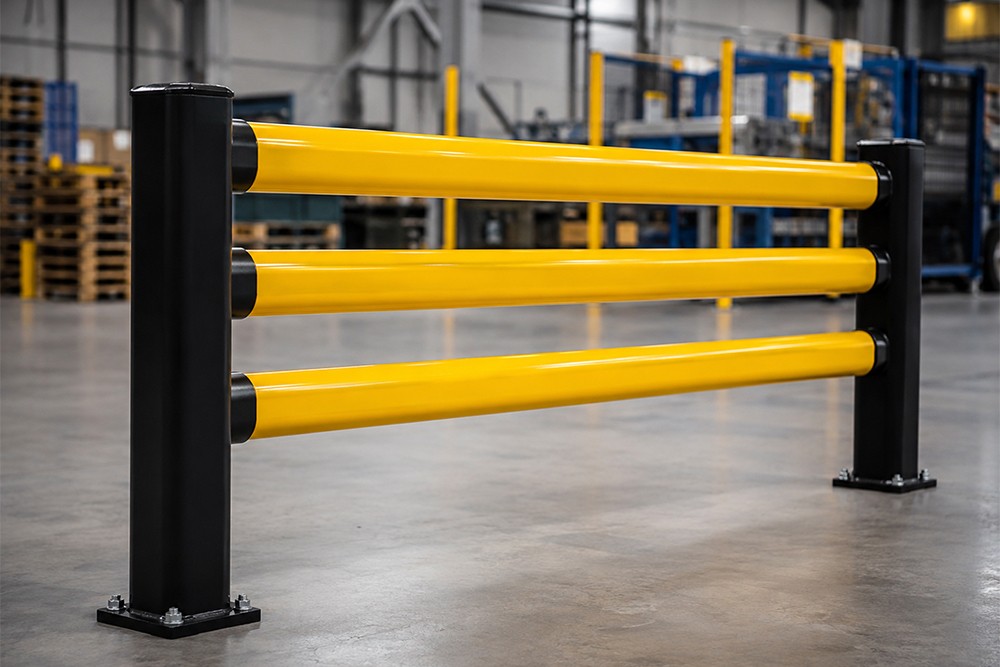
Safety barriers are steel protection systems that physically separate pedestrian, vehicle, machinery and equipment movement in factories, warehouses, production areas and dispatch zones. They define hazardous areas, regulate vehicle routes and protect critical equipment against impact.
Each system is engineered specifically according to vehicle type, traffic intensity, the area to be protected, floor structure and site layout.
What Is a Safety Barrier?
A safety barrier is a physical protection system used to prevent forklifts, pallet trucks, service vehicles and other mobile equipment from entering designated areas in an uncontrolled manner.
Depending on project requirements, the system may include:
- Steel tubes and profiles
- Base plates
- Mechanical or chemical anchors
- Corner and turning modules
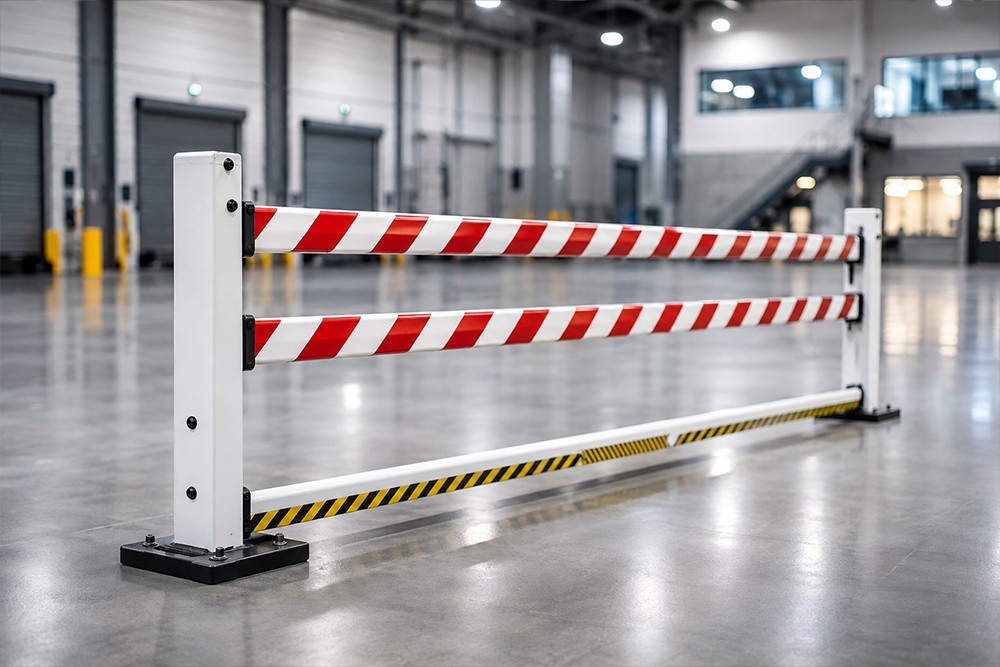
- Access gates
- Modular connection elements
- Reflective warning details
- Protective paint or galvanized coating
Advantages of Safety Barriers
Separate Pedestrian and Vehicle Traffic
Physically separate employees from forklift and vehicle routes.
Protect Machinery and Equipment
Provide impact protection around machinery, control panels, conveyor supports and sensitive equipment.
Protect Columns and Racking
Reduce impact damage to columns, door frames, wall corners and rack supports.
Support Production Continuity
Help reduce unplanned downtime and equipment damage caused by collisions.
Provide High Visibility
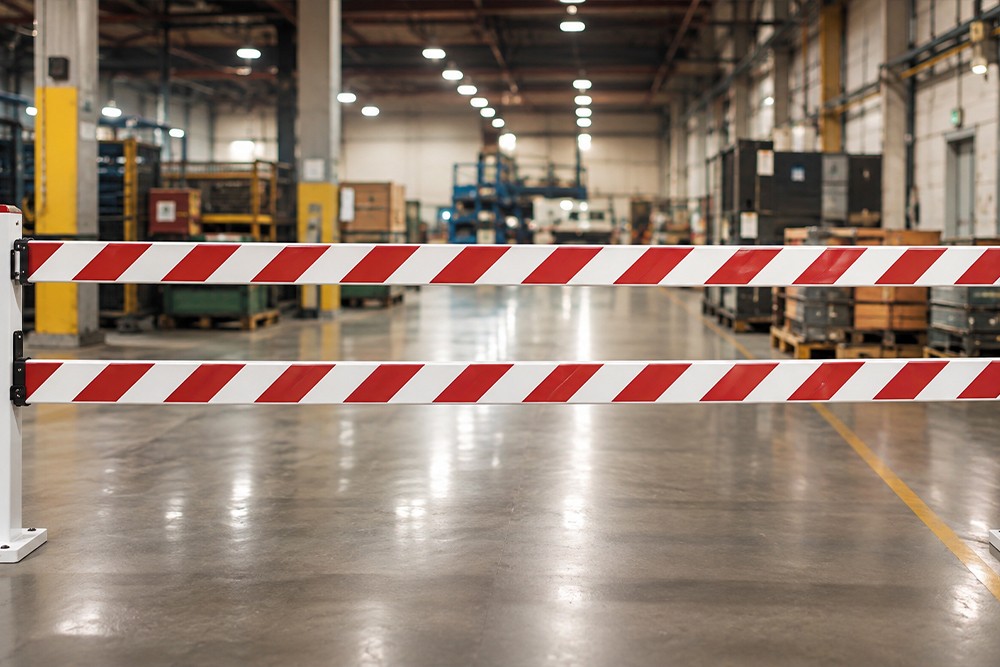
Remain easy to notice through contrast colors and reflective details.
Offer a Modular and Expandable Structure
Barrier lines can be moved, extended or rearranged when the facility layout changes.
Types of Safety Barriers
Forklift Separation Barriers
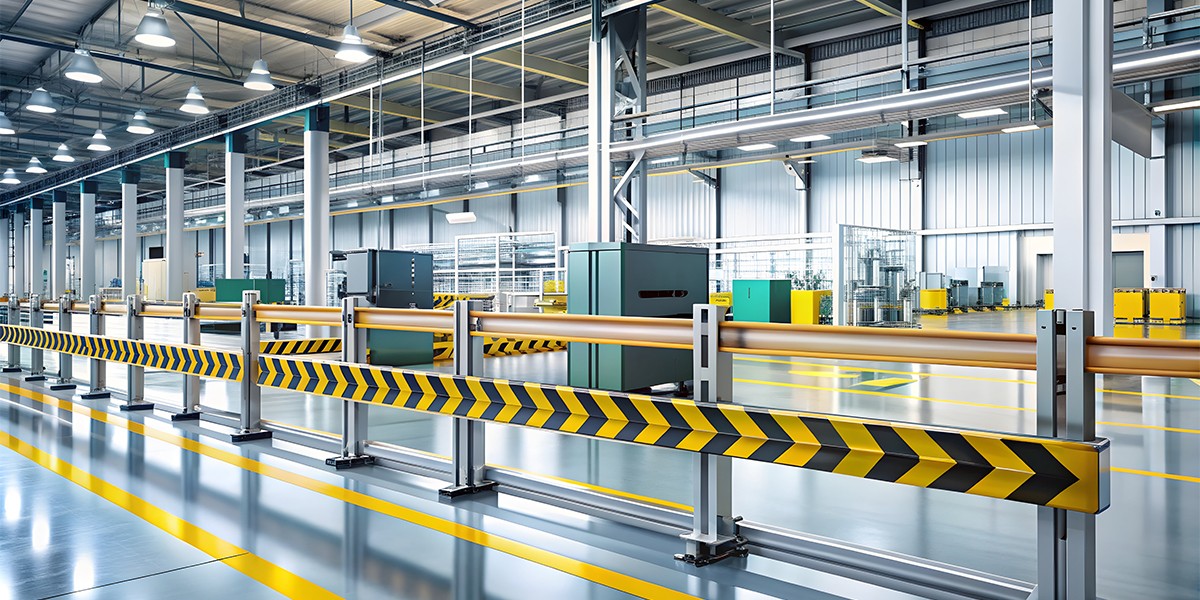
Separate forklift routes from pedestrian crossings, machinery areas and storage zones.
Pedestrian Walkway Barriers
Support safe movement along designated pedestrian routes.
Machinery Protection Barriers
Protect machinery, panels, conveyors and automation equipment against vehicle impact.
Column and Rack Protection Barriers
Provide physical protection around columns, rack supports, door frames and structural elements.
Door and Access Protection Barriers
Create safe approach limits around industrial doors, loading areas and access points.
Heavy-Duty Safety Barriers
Manufactured with reinforced sections for areas with intensive vehicle traffic and high impact risk.
Key Design Considerations
- Type of area to be protected
- Vehicle and equipment type
- Impact direction and approach angle
- Traffic intensity
- Forklift turning radius
- Barrier height
- Profile section and wall thickness
- Floor structure and anchoring capacity
- Access and service openings
- Visibility and color selection
- Future layout changes
- Maintenance and cleaning access
Application Areas
- Production lines
- Warehouses and logistics centers
- Automotive and supplier industries
- Metalworking facilities
- Food and packaging plants
- White-goods manufacturing
- Chemical and energy facilities
- Defense and aerospace industries
- Loading and dispatch areas
- Industrial zones and factory sites
Our Production Process
Each project is evaluated individually according to traffic flow, protected areas and site conditions.
1. Technical Assessment and Site Survey
Vehicle routes, pedestrian walkways, turning points, columns, racks, doors and floor conditions are evaluated on site.
2. System Design
Barrier lengths, heights, profile sections, base plates, corner details, access openings and anchoring arrangements are determined.
3. Manufacturing
Steel tubes, profiles, plates and connection components are cut, formed and welded according to project dimensions.
4. Surface Treatment and Inspection
Electrostatic powder coating, galvanizing or protective coating is applied. Dimensions, welds and connection components are inspected.
5. Shipment and Site Installation
Barriers are positioned according to the project, aligned and anchored securely to the floor.
6. Final Inspection and Handover
Access widths, connection tightness, visibility and site compatibility are checked before handover.
Safety Barrier Modification and Reinforcement
Existing barriers may develop impact deformation, loose anchors, damaged connections or worn surface coatings over time.
Following a technical inspection, the following works may be carried out:
- Replacement of damaged barrier modules
- Profile and connection reinforcement
- Anchor renewal
- Barrier-line extension or shortening
- Corner and access modification
- Addition of gates or controlled crossings
- Addition of reflective warning details
- Surface-coating renewal
Material and Surface Options
Material and surface treatment are selected according to impact risk, frequency of use and operating environment.
Steel Tubes and Profiles
Used for the barrier body. Section size and wall thickness are selected according to expected impact risk.
Base Plates
Transfer loads evenly to the floor and provide a strong anchoring connection.
Mechanical and Chemical Anchors
Selected according to floor type, concrete thickness and barrier loads.
Electrostatic Powder Coating
Provides a durable, highly visible surface for indoor applications. Yellow, black-yellow or corporate colors can be applied.
Galvanizing and Protective Coatings
Provide long-term protection in outdoor, humid and corrosive environments.
Reflective Warning Details
Improve visibility in low-light or high-traffic areas.
Why Nevas Çelik?
Projects are prepared according to facility traffic, risk points and protected areas rather than as standard products.
Site survey, design, steel fabrication, surface treatment and installation are managed within a single process. Modular solutions also allow barrier systems to adapt to future layout changes.
Information Required for a Quotation
- Photographs of the area to be protected
- Layout plan, if available
- Approximate barrier length and height
- Forklift or vehicle type
- Pedestrian and vehicle traffic directions
- Door and access points
- Floor type and concrete information
- Preferred color or coating
- Installation location
- Planned application date
Frequently Asked Questions
Are safety barriers manufactured in standard dimensions?
No. Overall dimensions, height, profile sections and connection details are engineered according to site conditions.
Can barriers be manufactured for forklift traffic?
Yes. A suitable system can be designed according to forklift weight, route, turning angle and traffic intensity.
Can they be used for pedestrian walkways?
Yes. They can physically separate pedestrian routes from forklift and vehicle traffic.
Can columns, racks and machinery be protected?
Yes. U-shaped, corner or perimeter-protection solutions can be manufactured according to the protected element.
Can they be installed in an existing facility?
Yes. A site survey can be carried out and an installation plan prepared to minimize disruption to production and logistics activities.
Do you provide installation services?
Yes. Shipment, alignment, anchoring and final inspections can be included in the project scope.
A Project-Specific Solution for Safe Facility Traffic
Technical assessment and project engineering can be provided for a safety-barrier system suited to your facility traffic, risk areas and protected equipment.
You can request a quotation for a new installation, an existing barrier-line modification or an expansion by sharing your project information.