 Türkçe
Industrial Scrap Bins | Factory Scrap Collection Systems
Industrial Scrap Bins for Organized, Safe and Efficient Scrap Management
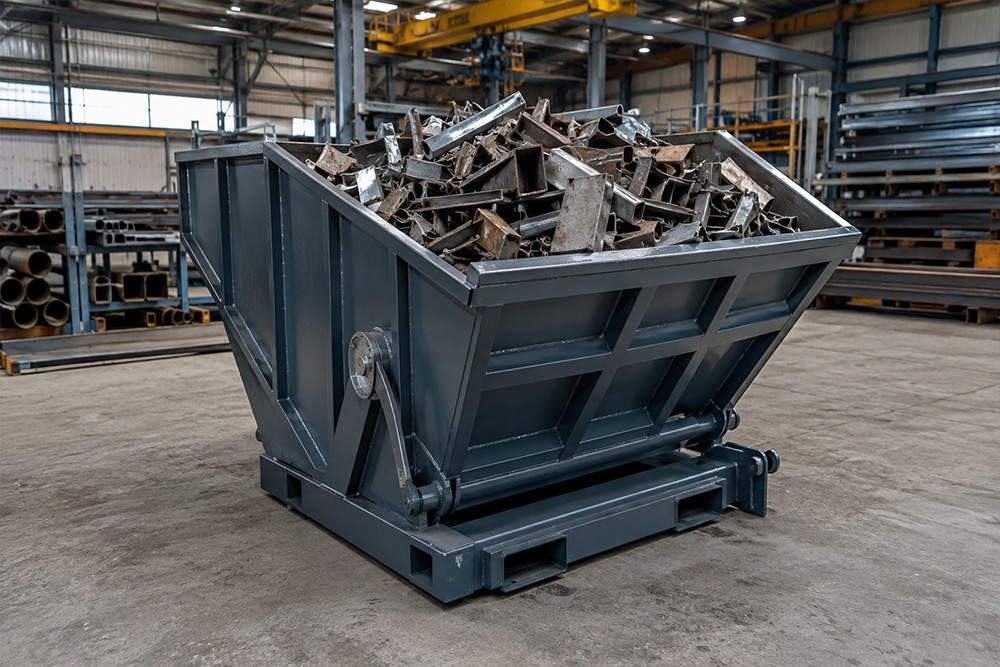
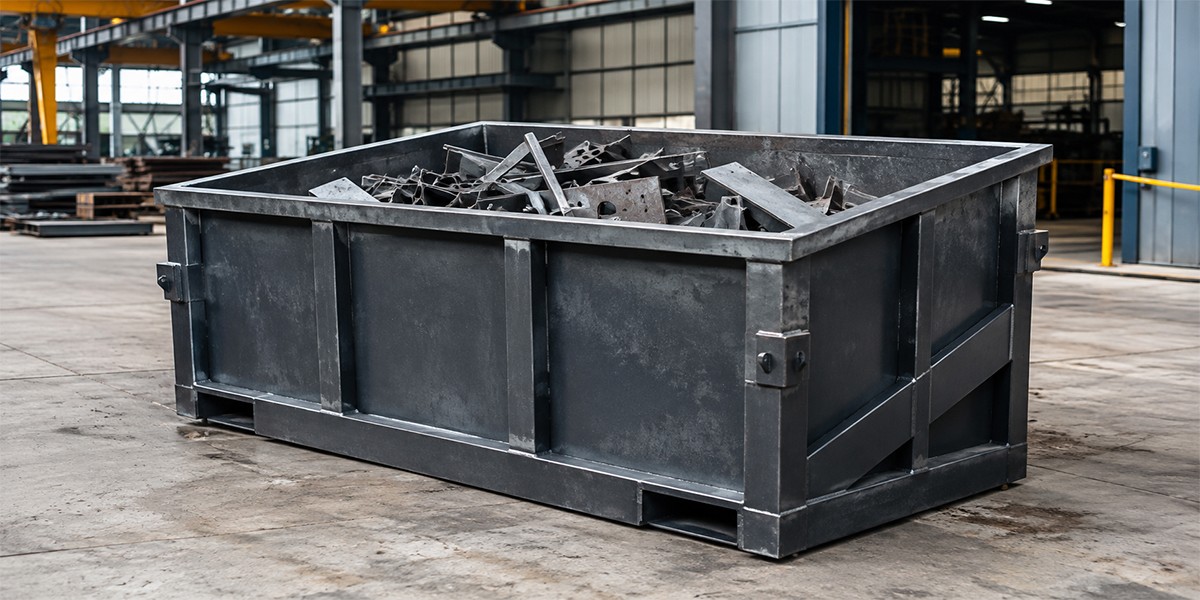
Industrial scrap bins are steel equipment used to collect, move and discharge metal, sheet offcuts, swarf, components, cables, plastics and production scrap safely in factories, warehouses and industrial facilities. They improve workplace organization, support source separation and make recycling and recovery operations more controlled.
Each system is engineered specifically according to scrap type, daily volume, density, handling method, discharge method, forklift access, leak-tightness requirements and site layout.
What Is an Industrial Scrap Bin?
An industrial scrap bin is durable equipment manufactured from steel sheet and profiles for collecting scrap generated during production and maintenance processes at defined points.
Depending on project requirements, the system may include:
- Carbon-steel sheet body
- Profile and corner reinforcements
- Forklift pockets
- Fixed, swivel or braked wheels
- Hinged or sliding lids
- Divided internal compartments
- Tipping or bottom-discharge mechanisms
- Lifting lugs
- Leak-resistant base construction
- Label and color-coding areas
Advantages of Industrial Scrap Bins
Improve Workplace Organization
Keep scrap at defined collection points and help production and access areas remain clean.
Support Occupational Safety
Limit the accumulation of sharp, heavy or loose parts on the floor and help reduce injury and trip risks.
Separate Scrap at Source
Use colors, labels and compartments to simplify recycling and material recovery.
Support Forklift Handling
Reinforced forklift pockets and a balanced body speed up internal transport operations.
Limit Spillage and Scattering
High side walls, lids and leak-resistant bases help reduce contamination during storage and movement.
Reduce Discharge Time
Tipping, crane-lift or bottom-discharge mechanisms allow faster and more controlled transfer.
Types of Industrial Scrap Bins
Forklift-Pocket Scrap Bins
Fixed-body solutions with reinforced pockets for forklift lifting and transport.
Tipping Scrap Containers
Designed to discharge scrap quickly into larger containers through controlled forklift tipping.
Mobile Wheeled Scrap Bins
Fitted with fixed, swivel or braked wheels and moved close to the scrap-generation point.
Lidded Scrap Bins
Manufactured with top lids to limit dust, rain, outdoor exposure or unauthorized use.
Swarf and Metal-Part Bins
Suitable for collecting swarf and metal parts generated in CNC, turning, milling, press and metalworking areas.
Divided and Leak-Resistant Scrap Bins
Separate multiple scrap streams in one body or limit leakage from oily and damp production scrap.
Key Design Considerations
- Scrap type, density and physical characteristics
- Daily volume and emptying frequency
- Bin capacity and external dimensions
- Sheet thickness and body reinforcement
- Forklift pockets and center of gravity
- Wheel diameter, capacity and braking
- Discharge mechanism
- Leak-tightness and weld continuity
- Lid and lock requirements
- Color coding and labeling
- Forklift and pedestrian routes
- Maneuvering and discharge area
Application Areas
- Metalworking factories
- Automotive and supplier industries
- Machinery manufacturing plants
- Warehouses and logistics centers
- Food and packaging facilities
- Energy and technical facilities
- Recycling and scrap areas
- Production and assembly lines
- Maintenance and service departments
- Organized industrial zones
Our Production Process
Each project is evaluated individually according to scrap type, handling method and site conditions.
1. Requirements Analysis and Site Survey
Scrap type, daily volume, collection points, forklift routes, floor conditions, door clearances and discharge areas are evaluated.
2. Capacity and System Design
Bin volume, body type, sheet thickness, forklift pockets, wheels, lid and discharge mechanism are determined.
3. Manufacturing
Sheet metal, profiles, reinforcements, hinges, lids and connection components are cut, bent and welded according to technical drawings.
4. Surface Treatment and Quality Inspection
Electrostatic powder coating, wet paint or galvanizing is applied. Dimensions, welds, leak-tightness, lids and handling points are inspected.
5. Functional Testing and Shipment
Wheels, lids, tipping systems, forklift pockets and discharge scenarios are tested before safe shipment.
6. Site Placement and Handover
Bins are positioned at defined collection points and handed over after checking handling and discharge scenarios.
Modification and Reinforcement of Existing Scrap Bins
Intensive use, impact, corrosion, overloading or changing scrap streams may create a need to modify existing bins.
Following a technical inspection, the following works may be carried out:
- Body and base reinforcement
- Addition or renewal of forklift pockets
- Wheel and braking-system replacement
- Addition of lids and locks
- Addition of compartments and labeling areas
- Tipping-mechanism modification
- Leak-tightness improvement
- Addition of lifting lugs
- Surface-coating renewal
Material, Surface and Equipment Options
Materials and surface systems are selected according to scrap type, load capacity and operating environment.
Carbon-Steel Sheet
Provides a durable and cost-effective body solution for heavy-duty applications.
Profile and Corner Reinforcements
Help the bin retain its shape under load and resist impact.
Stainless Steel
Can be considered for special applications requiring hygiene, wash-down resistance or high corrosion protection.
Electrostatic Powder and Wet Paint
Provide durable and cleanable indoor surfaces; different RAL colors can be used for coding.
Galvanized Coating
Provides long-term corrosion protection in humid or outdoor conditions.
Wheels, Lids and Locks
Fixed, swivel and braked wheels; manual, assisted or sliding lids; and locking options can be applied.
Why Nevas Çelik?
Projects are not limited to standard bin dimensions; they are prepared according to actual scrap type, load, handling method, discharge scenario, site traffic and environmental conditions.
Site survey, technical design, sheet-metal processing, welding, surface treatment, quality inspection and delivery are managed within a single process. Existing bins can also be reinforced or modified with new wheels, lids, forklift pockets and body details.
Information Required for a Quotation
- Scrap type and approximate density
- Daily or weekly scrap volume
- Required bin capacity and approximate dimensions
- Forklift, crane or manual handling requirements
- Discharge method and target-container height
- Wheel and brake requirements
- Lid or leak-tightness requirements
- Indoor or outdoor use
- Color and labeling preferences
- Photographs of the application area
- Required quantity and delivery location
- Requested delivery schedule
Frequently Asked Questions
Which materials are industrial scrap bins made from?
They are generally manufactured from carbon-steel sheet and profile reinforcements selected according to operating loads.
Are dimensions standard?
No. Capacity, loads, handling method and site layout can be used to define project-specific dimensions.
Can they be handled by forklift?
Yes. Forklift pockets with suitable dimensions and reinforcement can be included.
Can tipping or wheeled models be manufactured?
Yes. Controlled forklift-tipping mechanisms or wheels selected according to load and floor conditions can be applied.
Can leak-resistant bins be made for oily swarf?
Yes. Continuously welded bases and suitable body details can limit leakage.
Can existing bins be modified?
Yes. Wheels, lids, forklift pockets, compartments, leak-tightness and body reinforcement can be modified where suitable.
A Project-Specific Solution for Organized and Safe Scrap Management
Technical assessment and project engineering can be provided for an industrial scrap bin suited to your scrap type, daily capacity, handling and discharge methods.
You can request a quotation for new production, reinforcement of existing bins or handling and discharge-equipment modifications by sharing your project information.