 Türkçe
Conveyor Repairs | Industrial Conveyor Maintenance and Repair
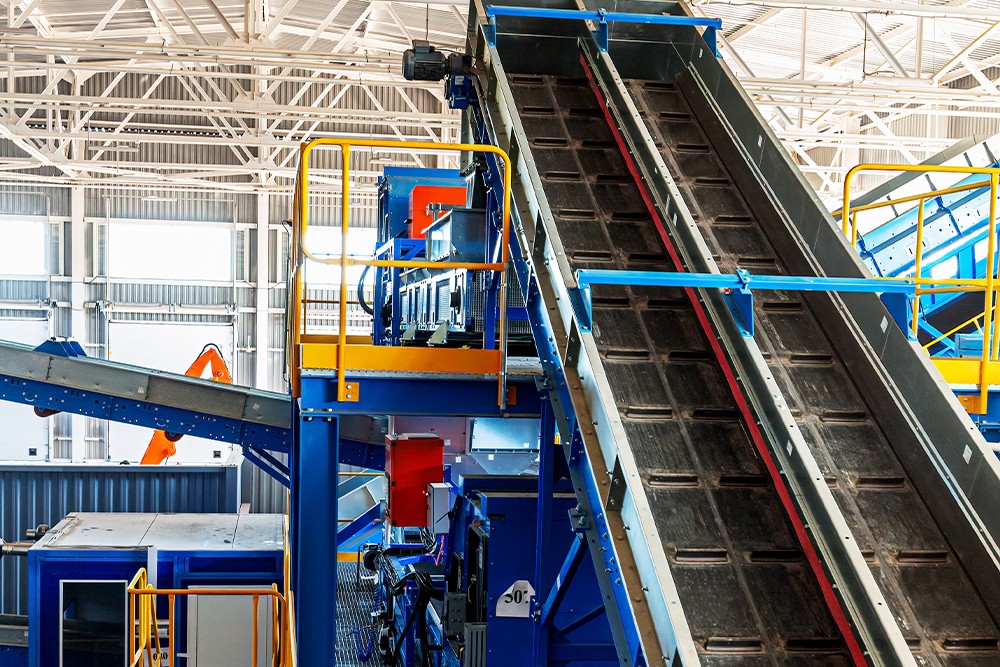
Industrial Conveyor Repairs for Continuous and Reliable Material Flow
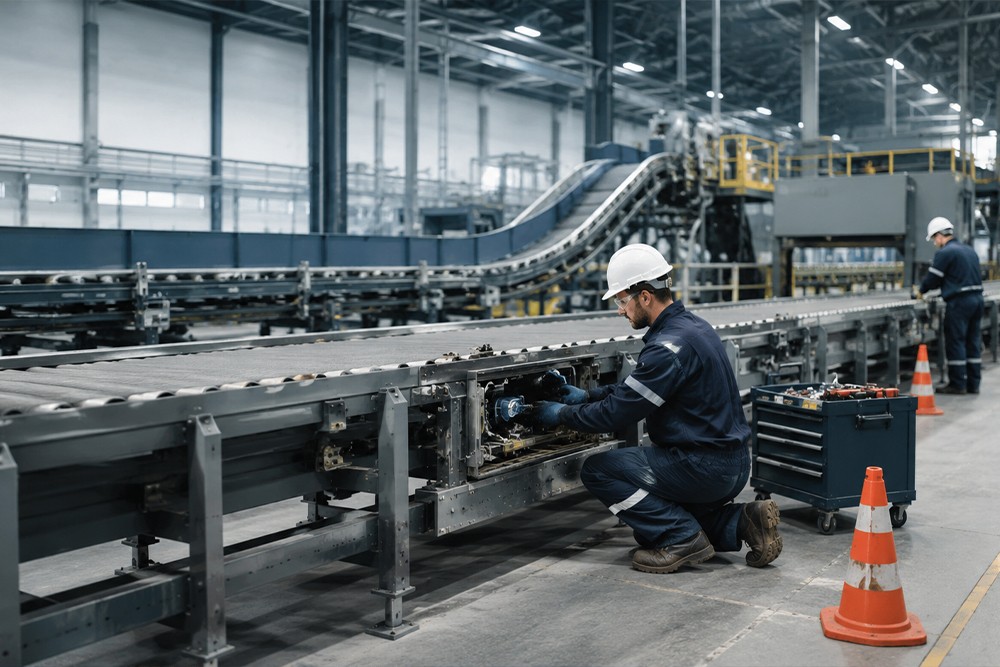
Conveyor repairs cover the correction of mechanical, structural and connection failures in belt, roller, chain and custom transfer systems. Chain breaks, bearing failures, belt misalignment, frame deformation or drive-unit problems can affect the entire production line.
Each repair is planned according to conveyor type, handled product, load, operating speed, maintenance history and site conditions. The objective is not only to restart the system but to identify the cause and create a lasting solution that reduces recurrence.
What Is Conveyor Repair?
Conveyor repair is the process of identifying and correcting damage, wear, misalignment and connection problems that cause loss of function in material-handling systems.
Depending on the repair scope, the following work may be carried out:
- Belt-conveyor maintenance and repair
- Roller-conveyor mechanical modifications
- Chain-conveyor repairs
- Drum, roller, bearing and housing replacement
- Conveyor-frame straightening and reinforcement
- Motor and gearbox connection modifications
- Tensioning and guiding-system renewal
- Belt tracking and alignment adjustments
- Protective sheet-metal guard fabrication
- Line extensions and route modifications
Advantages of Conveyor Repairs
Help Reduce Unplanned Downtime
Repairs focused on the root cause limit repeated interventions and unexpected production stoppages.
Extend Existing System Life
Frames, drums, rollers and connection components can be renewed without replacing the entire system.
Improve Material Flow
Correct alignment of belts, chains and rollers supports smooth product movement without jamming or uncontrolled direction changes.
Limit Energy Loss
Seized rollers, incorrectly tensioned belts and misaligned drive elements are corrected to provide more balanced operation.
Reduce Product and Equipment Damage
Irregular movement, friction and faulty guiding are corrected to improve handling quality.
Support Occupational Safety
Damaged guards, exposed chains and loose components are renewed to create a safer working area.
Types of Conveyor Repairs
Belt-Conveyor Repairs
Include belt replacement, tracking, drum coating, tension adjustment and renewal of scrapers and side guides.
Roller-Conveyor Repairs
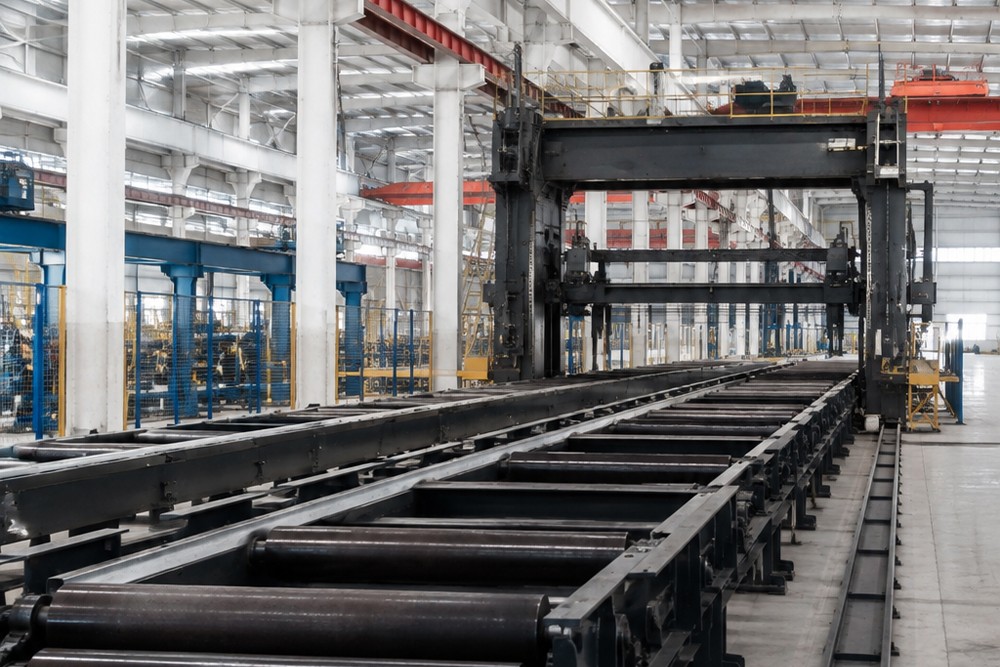
Seized or bent rollers, shafts, bearings, chain-transfer components and side frames are repaired or replaced.
Chain-Conveyor Repairs
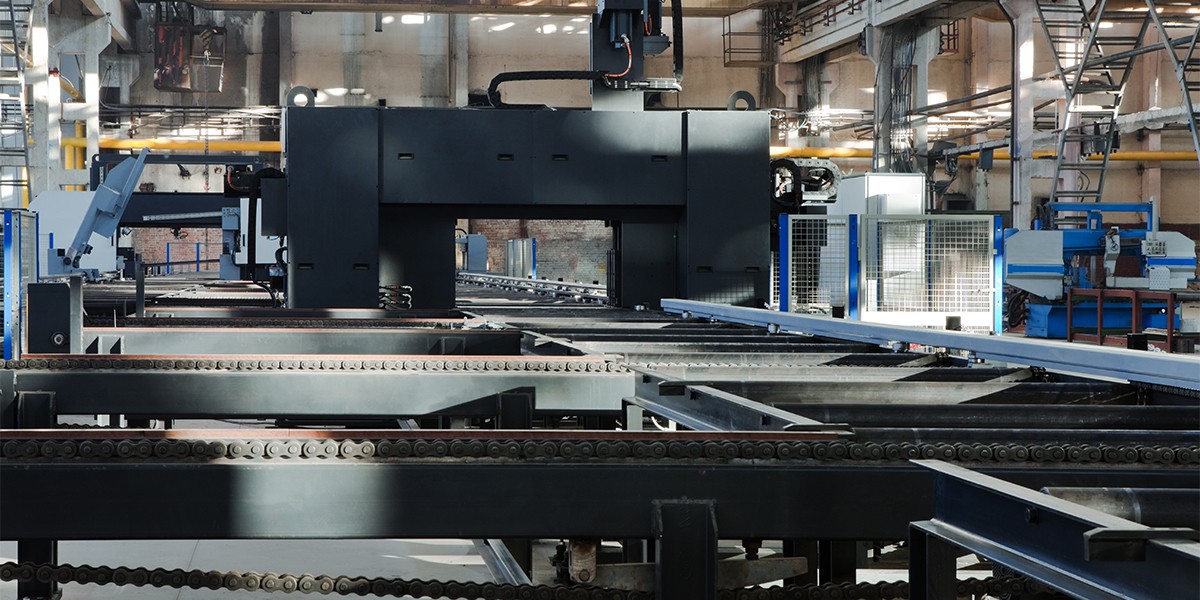
Wear in chains, sprockets, guides, tensioners and drive components is corrected, and alignment and chain tension are readjusted.
Frame and Support Modifications
Deformed frames are straightened, cracked sections are renewed and insufficient support points are reinforced.
Drive-Unit Modifications
Motor-gearbox bases, mounting plates, coupling alignment and drive-drum bearings are inspected and corrected.
Drum and Roller Renewal
Worn drums, shafts and bearing surfaces are measured and restored through new fabrication, coating or bearing modifications.
Key Repair Considerations
- Conveyor type and operating principle
- Product weight and dimensions
- Line speed and daily operating time
- Condition of the frame and supporting body
- Belt or chain alignment
- Drive and tensioning system
- Bearings and bearing points
- Weld and connection details
- Protective guards
- Dust, humidity, temperature and chemical effects
- Maintenance and cleaning access
- Production shutdown and site conditions
Application Areas
- Automotive and supplier industries
- Metalworking facilities
- Food and packaging production
- Plastics and rubber industries
- Warehouses and logistics centers
- White-goods and electronics manufacturing
- Mining, aggregate and cement plants
- Energy and recycling facilities
- Machinery manufacturing and automation
- Custom transfer and production lines
Our Repair Process
Each project is evaluated individually according to the failure scope, system structure and production conditions.
1. Failure Information and Site Inspection
Conveyor type, failure symptoms, handled product, operating time and maintenance history are reviewed. The frame, drive, moving elements and connections are inspected on site.
2. Root-Cause Analysis and Planning
Misalignment, overload, incorrect tensioning, insufficient support or wear conditions are identified. Components to be repaired or renewed are planned.
3. Removal and Measurement
Damaged parts are removed in a controlled manner. New manufacturing dimensions are prepared from samples, site measurements or technical drawings.
4. Part Fabrication and Mechanical Repair
Profiles, plates, shafts, drums, rollers, brackets and guards are manufactured, and frame, connection and drive sections are repaired.
5. Installation, Alignment and Surface Treatment
Parts are installed, and rollers, drums, chains and drive components are adjusted to the correct alignment and tension. Paint or protective coatings are applied where required.
6. Test Run and Handover
The conveyor is tested empty and under controlled load. Noise, vibration, misalignment, friction, product flow and guards are inspected before handover.
Conveyor Modification and Capacity Improvement
Existing conveyors can be modified not only because of failures but also when product dimensions, load values, line speed or transport direction change.
Following a technical inspection, the following work may be carried out:
- Frame and support reinforcement
- Line height or length modification
- Addition of new support legs
- Loading and unloading-point modification
- Addition of transfer modules
- Drive-unit modification
- Roller, drum or chain-system renewal
- Addition of protective guards
- Improvement of belt-tracking systems
Material and Surface Options
Material and surface treatment are selected according to load, speed, operating environment and wear conditions.
Carbon-Steel Profiles and Plates
Used for conveyor frames, supports, brackets and guards.
Stainless Steel
Can be considered for food, chemical, wash-down and humid-environment applications.
Wear-Resistant Materials
Used on guides, sliding surfaces and areas with intensive product contact.
Electrostatic Powder Coating
Provides a durable surface for indoor use and can be matched to corporate colors.
Wet Paint and Industrial Coatings
Provide suitable protection for large frames and site repairs.
Galvanizing and Corrosion Protection
Extend the service life of components exposed to humid or outdoor conditions.
Why Nevas Çelik?
Failures are evaluated not only through visible damage but by considering conveyor operating conditions, loads, alignment and mechanical connections together.
Site survey, dismantling, measurement, steel fabrication, part renewal, installation, adjustment and commissioning are managed within a single process. Custom components can also be manufactured from samples and site measurements for old systems without available drawings or manufacturers.
Information Required for a Quotation
- General and detailed photographs of the conveyor
- Conveyor type and approximate dimensions
- Type, size and weight of the handled product
- Failure symptoms
- Belt width, chain type or roller dimensions
- Motor and gearbox information
- Daily operating time and line speed
- Technical drawing or layout plan, if available
- Site operating conditions
- Available production-shutdown window
Frequently Asked Questions
Which conveyor types can be repaired?
Mechanical maintenance, repair and modification can be carried out on belt, roller, chain and custom transfer conveyors.
Can belt misalignment be corrected?
Yes. Drums, rollers, frame, tensioning and loading points can be inspected together to eliminate the underlying cause.
Can a single roller or drum be manufactured?
Yes. Individual components can be manufactured from a sample, confirmed dimensions or technical drawings.
Can old systems with unknown brands be repaired?
Yes. Compatible mechanical solutions can be developed using site measurements and component samples.
Can the conveyor frame be reinforced?
Yes. Depending on load, span and deformation, profiles, plate supports and new legs can be added.
Can repairs be completed without stopping production?
Some local work can be completed during short planned stoppages. The conveyor must be safely stopped for work requiring mechanical access and safe intervention.
Technical Conveyor Repair for Continuous Material Flow
Technical assessment can be provided for maintenance and repair solutions suited to the conveyor type, failure scope and production conditions.
You can request a quotation for mechanical fault correction, part fabrication, frame reinforcement or capacity modification by sharing your system information.