 Türkçe
Machine Relocation | Industrial Relocation
Industrial Machine Relocation for Safe and Controlled Production Revisions
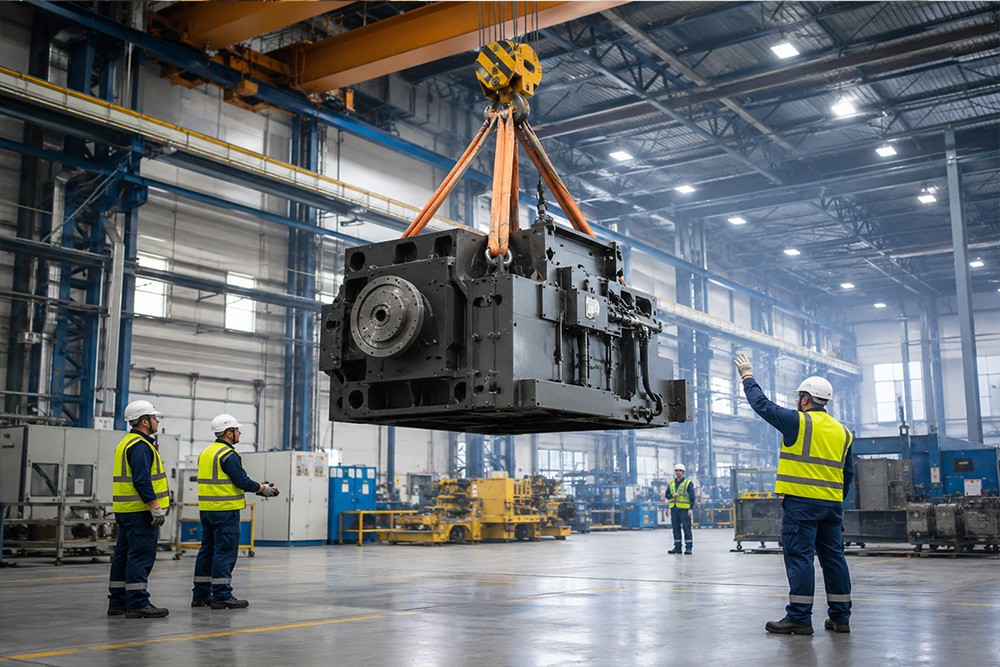
Machine relocation is the process of moving industrial equipment from its existing position to a new location within the same facility or to another plant due to production planning, capacity increases, line modifications or space optimization. It involves more than physical transport; safe disassembly, lifting plans, route checks, precise positioning, anchoring, utility connections and recommissioning must be managed together.
Each project is engineered specifically according to machine weight, dimensions, center of gravity, lifting points, transport route, floor capacity, new layout dimensions, utility connections and production schedule.
What Is Machine Relocation?
Machine relocation is the controlled process of safely disconnecting, lifting, moving horizontally or vertically, positioning and recommissioning industrial equipment.
Depending on project requirements, the service may include:
- Short-distance relocation within the facility
- Repositioning within a production line
- Movement between production areas
- Relocation between facilities
- Heavy and precision-machine handling
- Complete production-line relocation
- Custom transport-frame and tooling production
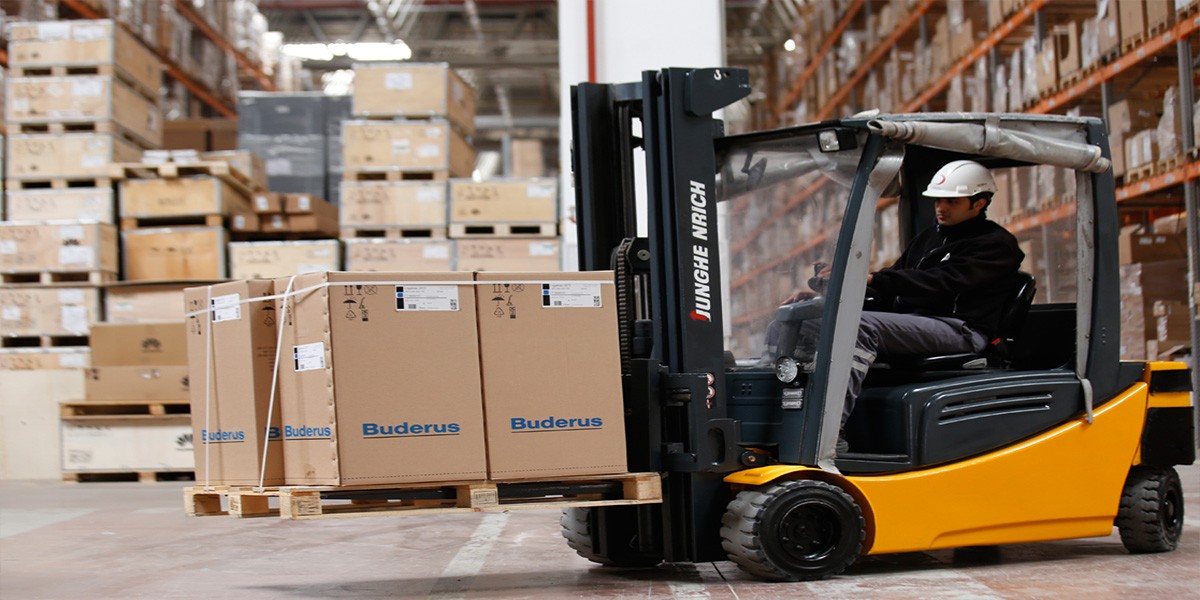
- Crane, forklift and hydraulic handling
- Anchoring and fixing modifications
- Commissioning and functional checks
Advantages of Machine Relocation
Improve Production-Area Utilization
Repositioning machines according to the new workflow reduces unnecessary handling distances and improves space organization.
Control Production Downtime
Disassembly, transport and installation are planned in advance and scheduled according to the production program.
Protect the Machine
Correct lifting points, custom frames and controlled handling methods help protect the machine body and sensitive components.
Support New Line Layouts
Machines, conveyors, operator areas and auxiliary equipment can be reorganized according to the new production scenario.
Improve Maintenance Access
Service doors, maintenance clearances and component-replacement areas are considered in the new layout.
Provide Precise Positioning
Machine level, elevation, axes and alignment with surrounding equipment are checked using measurement tools.
Types of Machine Relocation
Short-Distance In-Plant Relocation
Moving a machine within the same production hall or to a nearby section.
In-Line Repositioning
Rearranging the machine and surrounding equipment to improve production flow.
Movement Between Departments
Transferring machinery to another hall, floor or production section through a controlled route.
Inter-Facility Relocation
Managing disassembly, packing, shipment, installation and recommissioning at another plant.
Heavy and Precision-Machine Handling
Moving high-weight or precision equipment using dedicated lifting plans and handling systems.
Complete Production-Line Relocation
Moving multiple machines, conveyors, robots and auxiliary equipment together with their connections.
Key Planning Considerations
- Machine weight and center of gravity
- Machine dimensions and lifting points
- Transport route and door clearances
- Ceiling height and turning space
- Existing and new floor capacity
- New layout axes and elevations
- Operator and maintenance clearances
- Electrical and process connections
- Anchoring and fixing details
- Required handling equipment
- Occupational-safety risk analysis
- Production schedule and phasing
Application Areas
- CNC machine tools
- Presses and injection-molding machines
- Robotic cells and automation equipment
- Conveyors and transfer systems
- Packaging and filling machines
- Metalworking and heavy-industry machinery
- Compressors, pumps and generator systems
- Assembly and test stations
- Warehouse and logistics equipment
- Complete production lines
Our Application Process
Each project is evaluated individually according to machine specifications, transport route and production schedule.
1. Requirements Analysis and Site Survey
Technical machine data, current and new locations, dimensions, weight, route, floor conditions, connections and working area are evaluated.
2. Transport and Layout Planning
The lifting method, equipment, movement sequence, new layout axes, safety zones and work phases are determined.
3. Technical Preparation and Custom Fabrication
Required transport frames, lifting beams, lifting devices, connection plates, anchors and support components are engineered and manufactured.
4. Disassembly and Controlled Handling
Utility connections are safely isolated, sensitive components are protected and the machine is moved using cranes, forklifts, hydraulic jacks or transport dollies.
5. Positioning, Anchoring and Connections
The machine is positioned at the defined axis and elevation; leveling, fixing, anchoring and project-scope utility connections are completed.
6. Commissioning and Handover
No-load operation, functional, vibration, alignment and required production tests are completed before handover.
Modification of Existing Layout and Connections
After relocation, surrounding supports, platforms, pedestrian routes, barriers, cable trays, piping and maintenance access may need to be adapted to the new position.
Following a technical inspection, the following works may be carried out:
- Modification of machine frames and supports
- New fixing plates and anchoring
- Renewal of vibration isolators
- Platform and service-access modifications
- Cable-tray and utility-route revisions
- Pedestrian-route and barrier adjustments
- Renewal of conveyor and auxiliary-equipment connections
- Floor and foundation reinforcement
- Modular connections for future relocation
Handling, Fixing and Auxiliary Equipment Options
Methods and equipment are selected according to machine weight, geometry, route and site conditions.
Machine Transport Frames
Support the machine body and distribute loads evenly during transport.
Lifting Beams
Distribute crane forces to suitable lifting points for balanced handling.
Heavy-Load Transport Dollies
Provide controlled horizontal movement in restricted areas with low-profile, high-capacity systems.
Hydraulic Jacks and Leveling Systems
Used for controlled lifting, elevation adjustment and precise positioning on the floor.
Machine Fixing Plates
Transfer loads to the floor through plates designed according to the machine-base geometry.
Foundation Anchoring Systems
Mechanical or chemical anchors can be selected according to machine loads, vibration and dynamic effects.
Why Nevas Çelik?
Projects are not treated as simple transport operations; machine specifications, center of gravity, route, new layout, production schedule, anchoring and auxiliary utilities are evaluated together.
Site survey, transport planning, custom steel-tooling fabrication, disassembly, lifting, precise positioning, anchoring and commissioning are managed within a single process. Work in active production facilities can be phased according to planned shutdowns or off-shift periods.
Information Required for a Quotation
- Machine brand, model and technical specifications
- Approximate weight and external dimensions
- Photographs of current and new locations
- Transport route and door clearances
- Lifting points and manufacturer documents
- Floor and foundation information
- Electrical and process connections
- New layout plan and axis dimensions
- Required relocation date and production schedule
- Crane, forklift or special-equipment requirements
- Anchoring and fixing expectations
- Installation location and working hours
Frequently Asked Questions
Which equipment can be relocated?
The service can be applied to CNC machines, presses, injection-molding machines, robotic cells, conveyors, packaging machines and heavy industrial equipment.
Can work be carried out in an active production facility?
Yes. Work can be phased according to the production schedule and performed during off-shift hours or planned shutdowns.
How is the machine protected during transport?
Manufacturer-defined lifting points, suitable handling equipment, custom frames and a controlled movement plan are used to reduce damage risk.
Is a new foundation or anchoring system required?
Existing systems may be reused or new foundations and anchors may be applied according to machine loads, vibration and floor conditions.
Can electrical and process connections be modified?
Yes. Electrical, compressed-air, water, hydraulic and other process connections can be adapted to the new location within the project scope.
Can relocation between facilities be managed?
Yes. Disassembly, packing, shipment, installation and recommissioning can be planned as one integrated service.
A Project-Specific Solution for Safe Machine Relocation
A relocation plan can be prepared according to your machine specifications, transport route, new layout and production schedule.
You can request a quotation for in-plant movement, in-line repositioning, inter-facility relocation, anchoring or commissioning by sharing your project information.