0236 237 70 71
info@nevasinsaat.com
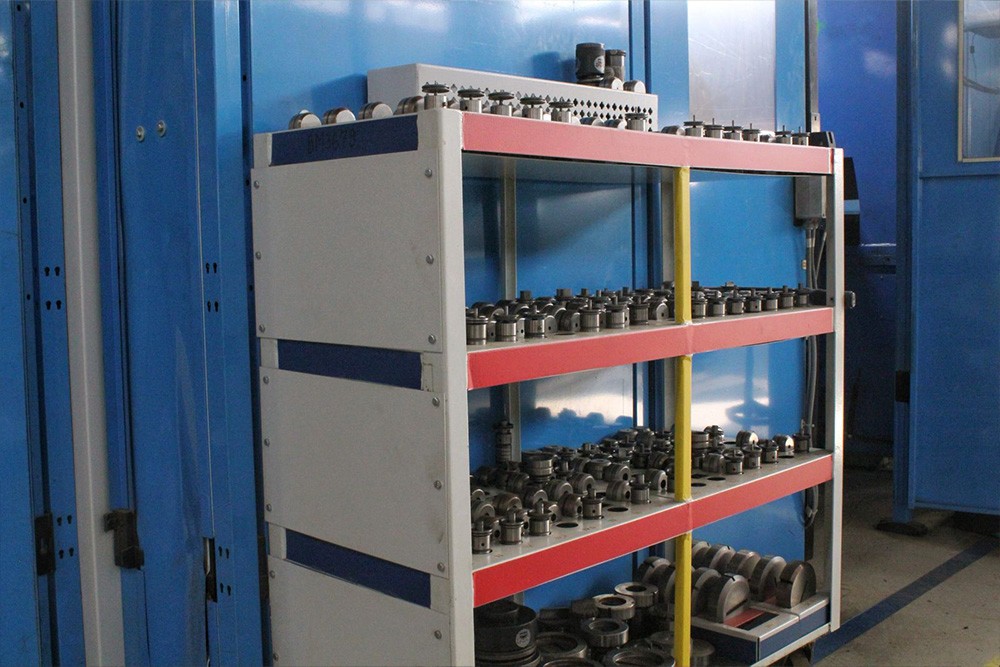
Die and mold racks are heavy-duty steel systems used to store injection molds, press dies, sheet-forming dies, casting molds and custom tooling safely, systematically and within easy reach. They prevent molds from being stored on the floor or in uncontrolled areas, improve storage capacity, shorten changeover time and help reduce workplace risks.
Each rack system is engineered specifically according to mold dimensions, weights, total quantity, handling method, shelf levels, platform type, crane or forklift access, floor capacity and future expansion requirements.
A die and mold rack is an industrial steel storage system designed to hold heavy production molds on fixed platforms, pull-out shelves or roller surfaces.
Depending on project requirements, the system may include:
Structural sections, platforms and connections are selected according to mold weight and shelf span.
Defined storage positions simplify inventory management and reduce the time required to locate the correct mold.
Layouts suited to cranes, forklifts or mold carts support more controlled loading and unloading.
Vertical storage creates higher capacity within the same area and reduces uncontrolled floor stacking.
Limit contact between molds and reduce exposure to floor moisture and uncontrolled impact.
Additional modules, shelf positions or platforms can be added when new molds are introduced.
High-capacity systems where molds are loaded directly by forklift, crane or mold cart.
Platforms extend outward to simplify top lifting with an overhead crane.
Roller surfaces allow controlled movement and integration with mold carts and transfer tables.
Shelf openings, beam clearances and fork-entry points are designed for forklift use.
Open-top layouts support access to lifting points and safe overhead handling.
Engineered for oversized, asymmetrical, very heavy molds or special lifting arrangements.
Each project is evaluated individually according to mold inventory, handling method and storage conditions.
Mold dimensions, weights, quantities, usage frequency, handling method, site dimensions, ceiling height and floor conditions are evaluated.
Rack rows, shelf dimensions, platform type, access directions, safe clearances and future expansion areas are planned.
Uprights, beams, platforms, pull-out mechanisms, stops, base plates and connections are manufactured according to technical drawings.
Electrostatic powder coating, wet paint, galvanizing or suitable protective coating is applied. Dimensions, welds, connections and moving mechanisms are inspected.
Platform movement, locks, stops, beam connections and module compatibility are tested before shipment.
The rack system is assembled, aligned and anchored on site; stability, clearances and safety components are checked before handover.
Forklift impact, worn pull-out mechanisms, beam deformation, loose connections, weld damage or the introduction of heavier molds may require existing systems to be modified.
Following a technical inspection, the following works may be carried out:
Materials and equipment are selected according to mold loads, shelf spans, usage intensity, movement mechanism and operating environment.
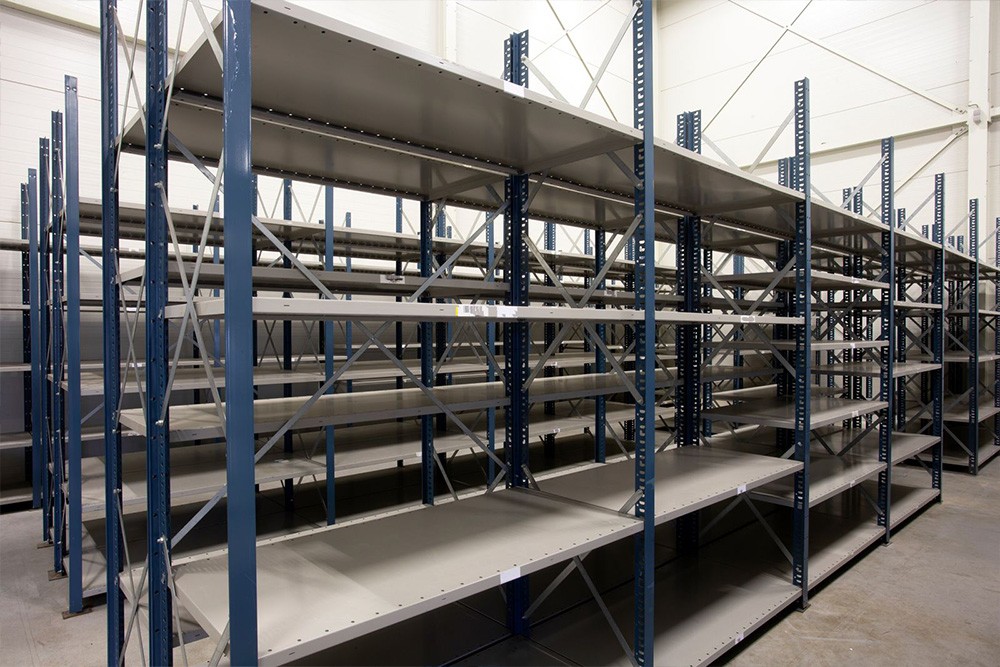
Suitable sections are used for uprights, beams, bracing and platform supports according to project loads.
Flat, bent, profile-reinforced or grating platforms can be manufactured according to point loads and mold footprints.
Heavy-duty mechanical components provide controlled movement in pull-out and movable racks.
Provides durable, cleanable surfaces in corporate colors for indoor applications.
Can be used for large systems or applications requiring special chemical resistance.
Provides long-term protection in humid, semi-open or highly corrosive storage areas.
Projects are not limited to standard rack dimensions; actual mold weights, footprints, handling methods, access areas, floor conditions and capacity targets are evaluated together.
Site survey, technical design, heavy steel fabrication, surface treatment and professional installation are managed within a single process. Reinforcement, platform and drawer modification, module addition and damaged-part renewal can also be carried out on existing die and mold racks.
Mold weight, shelf span, platform structure, number of levels, movement mechanism and floor conditions are evaluated together.
Yes. Bearing, slide or roller mechanisms can be designed according to mold weight and crane access.
No. They are engineered specifically according to mold dimensions, weights, handling methods and site layout.
Yes. Shelf openings, fork-entry points, top clearances and access distances can be designed for the handling equipment.
Yes. Uprights, beams, platforms, anchors and movement mechanisms can be reinforced or renewed following technical inspection.
Yes. Additional shelf positions, platforms or supporting modules can be added to modular systems.
Technical assessment and project engineering can be provided for a die and mold rack system suited to your mold inventory, handling method, capacity target and storage area.
You can request a quotation for new rack production, reinforcement of an existing system or platform, movement-mechanism, module and anchoring modifications by sharing your project information.
 Türkçe