 Türkçe
Roller Conveyor | Industrial Roller Transport Systems
Industrial Roller Conveyors for Controlled and Efficient Material Flow
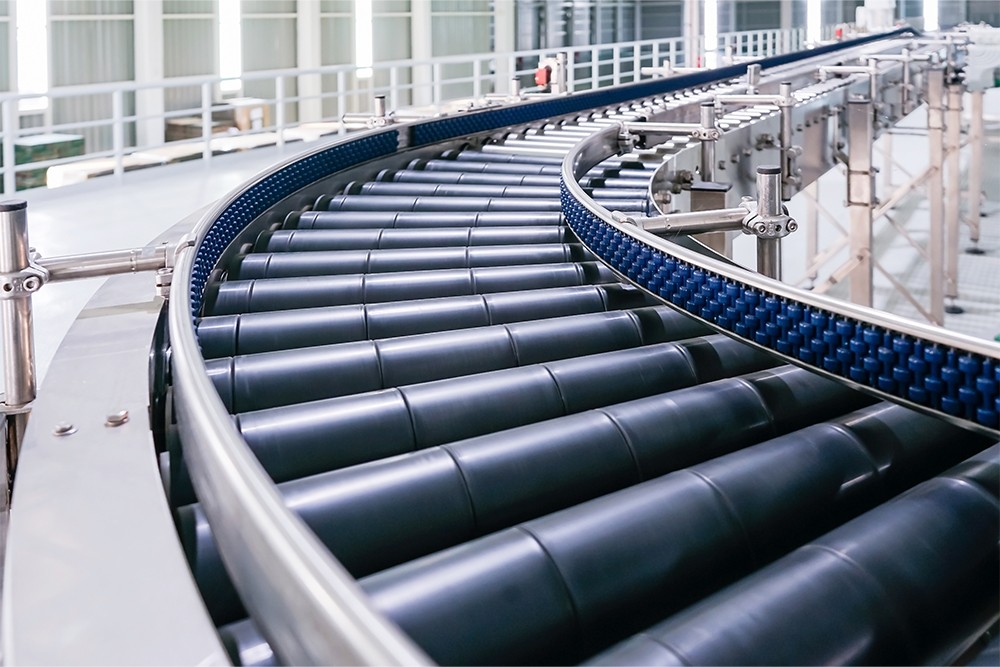
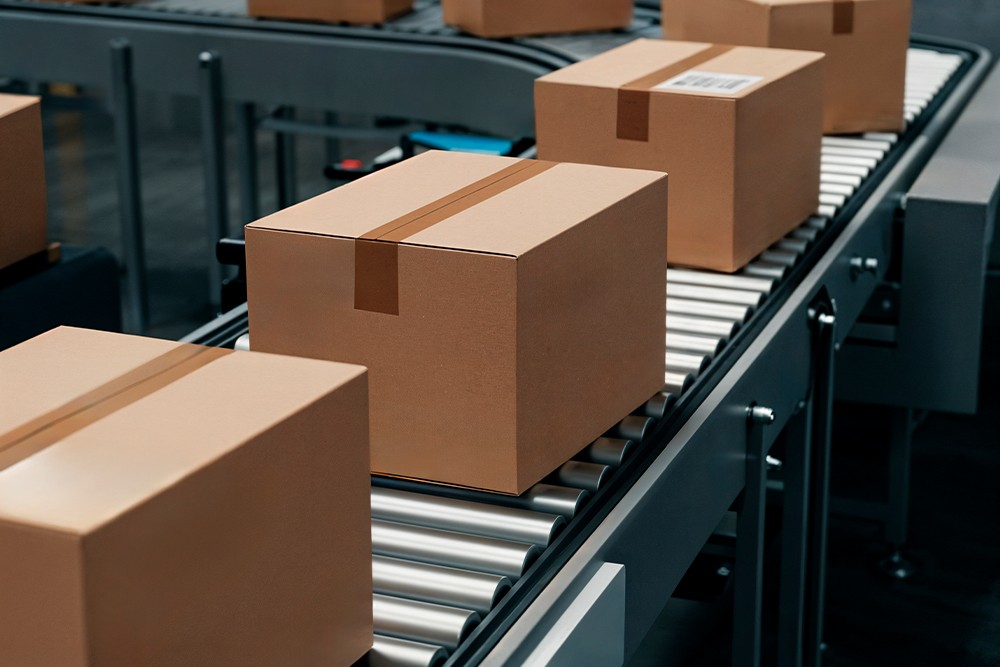
Roller conveyors are handling systems used to move cartons, crates, pallets, sheets and flat-based products between production, assembly, storage and dispatch areas. They reduce manual handling, organize flow between stations and support more efficient internal logistics.
Each system is engineered specifically according to product weight, base geometry, line width, conveying speed, accumulation requirements and operating environment.
What Is a Roller Conveyor?
A roller conveyor is a mechanical transfer system that moves loads along a horizontal or controlled inclined line using free-running or powered rollers.
Depending on project requirements, the system may include:
- Steel supporting frame
- Steel or coated rollers
- Roller shafts and bearing elements
- Motor and gearbox group
- Chain or belt drive system
- Side guides
- Mechanical or pneumatic stops
- Sensors and automation components
- Protective guards
- Adjustable feet and anchoring elements
Advantages of Roller Conveyors
Move Products in an Organized Manner
Allow cartons, crates, pallets, sheets and similar loads to progress along a defined route.
Reduce Waiting Between Stations
Continuous and balanced transport helps limit waiting times between production stages.
Support Line Synchronization
Create organized product flow between production machinery, robotic cells and inspection stations.
Facilitate Automation Integration
Can be integrated with sensors, stops, separators, accumulation and routing components.
Support Maintenance Access
Can be designed for easy access to rollers, bearings, drive groups and frame components.
Offer a Modular and Expandable Structure
Modules can be added, removed or rearranged when line layout or product type changes.
Types of Roller Conveyors
Gravity Roller Conveyors
Simple and economical systems in which products move by gravity, operator force or an external push.
Powered Roller Conveyors
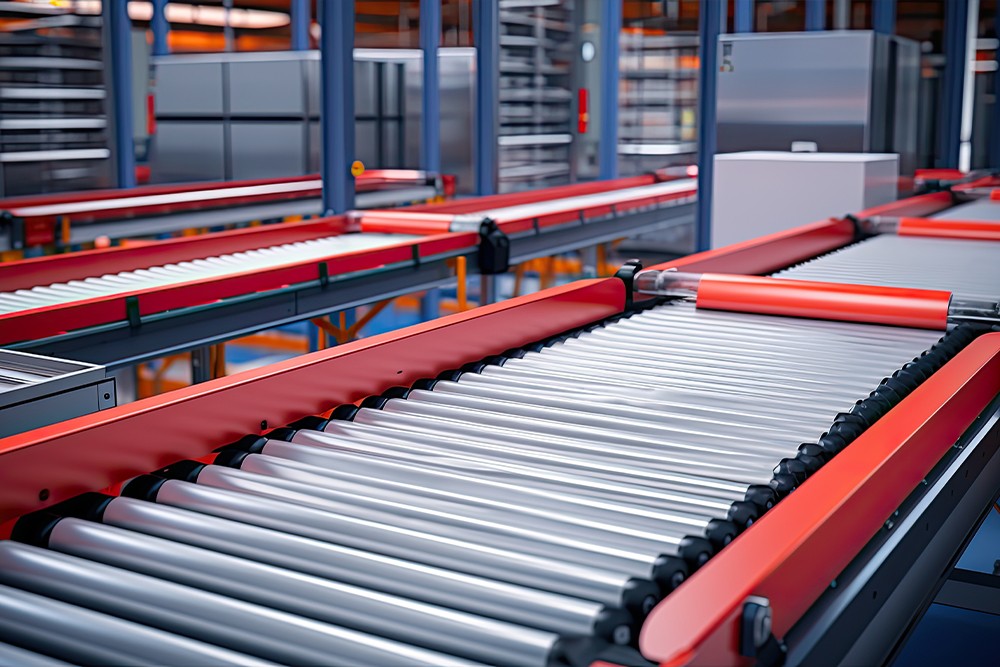
Controlled conveying systems in which rollers are driven by motor-gearbox and chain or belt mechanisms.
Chain-Driven Roller Conveyors
Used for pallets and heavy loads requiring high torque and durability.
Heavy-Duty Roller Conveyors
Manufactured with reinforced frames and rollers for heavy pallets, dies, metal parts and equipment.
Accumulation Roller Conveyors
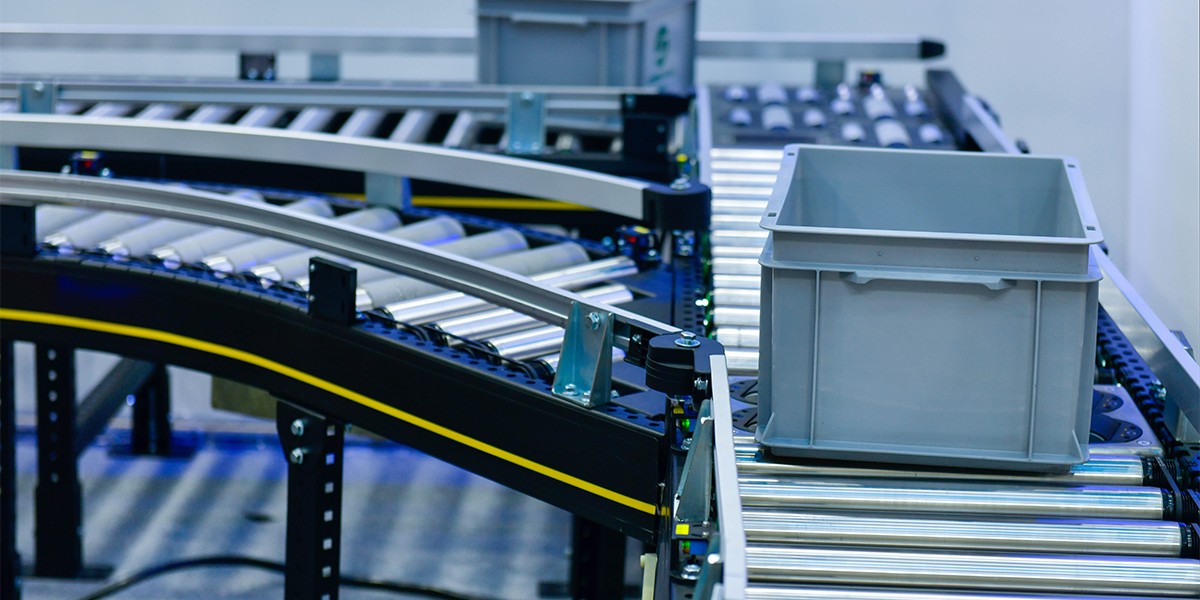
Allow products to accumulate and advance in sequence without applying pressure to one another.
Custom Transfer Roller Conveyors
Developed for turning, separation, direction changes, lifting and robotic feeding applications.
Key Design Considerations
- Product dimensions and maximum weight
- Base width and contact points
- Roller diameter, material and spacing
- Line width and total length
- Total conveying and accumulation capacity
- Motor and gearbox power
- Chain or belt drive structure
- Entry, exit and transfer elevations
- Side-guide and stop requirements
- Sensor and automation scenario
- Maintenance and cleaning access
- Corrosion and operating environment
Application Areas
- Automotive and supplier industries
- Metalworking facilities
- Food and packaging production
- White-goods and electronics manufacturing
- Warehouses and logistics centers
- Assembly and testing stations
- Pallet and crate transfer
- Robotics and automation lines
- Packaging and dispatch areas
- Heavy-load and custom production lines
Our Production Process
Each project is evaluated individually according to product characteristics, line capacity and site conditions.
1. Technical Assessment and Requirements Analysis
Product dimensions, weight, base structure, conveying direction, speed, accumulation requirements and site conditions are evaluated.
2. System Design
Line geometry, frame sections, roller diameter and spacing, drive group, guides, stops and automation points are determined. Technical drawings are prepared.
3. Manufacturing
Steel profiles, sheet metal, rollers, shafts, bearings, chains and connection components are cut, machined and assembled according to project dimensions.
4. Surface Treatment and Inspection
Electrostatic powder coating, wet paint, galvanizing or protective coating is applied. Dimensions, welds, roller axes and drive connections are inspected.
5. Testing and Functional Inspection
Roller movement, speed, direction, sensors, stops, accumulation behavior and product passage are tested under controlled conditions.
6. Shipment, Installation and Commissioning
The system is delivered, aligned, leveled and anchored; mechanical-electrical connections and trial operation are completed.
Roller Conveyor Modification and Capacity Increase
Existing roller conveyors may develop roller wear, bent shafts, bearing failures, chain elongation, frame deformation or drive-unit problems. Changes in product dimensions, line speed or capacity may also require system modification.
Following a technical inspection, the following works may be carried out:
- Roller, shaft and bearing replacement
- Chain, sprocket or belt renewal
- Frame and support reinforcement
- Line extension or shortening
- Motor and gearbox modification
- Addition of side guides and stops
- Sensor and automation integration
- Protective-guard renewal
- Surface-coating renewal
Material and Surface Options
Material and surface treatment are selected according to load capacity, product surface, hygiene requirements and operating environment.
Carbon-Steel Profiles
Form the main supporting frame of the conveyor. Sections are selected according to load, span and line geometry.
Steel Rollers
Provide high load capacity for heavy-duty and intensive-use applications.
Coated Rollers
Can be used to protect product surfaces, reduce noise or provide special friction characteristics.
Stainless Steel
Can be considered for food, chemical, wash-down and highly corrosive applications.
Electrostatic Powder Coating
Provides a durable surface suitable for indoor use and corporate colors.
Galvanizing and Industrial Coatings
Provide long-term protection in humid, outdoor or corrosive environments.
Why Nevas Çelik?
Projects are not limited to standard roller spacing; they are prepared according to product geometry, total load, line speed, accumulation requirements and automation scenario.
Site survey, design, steel fabrication, roller and drive-system production, surface treatment, site installation and commissioning are managed within a single process. Maintenance, modification and capacity-increase work can also be carried out on existing lines.
Information Required for a Quotation
- Photographs of the product to be transported
- Product dimensions and total weight
- Product base-contact dimensions
- Line length, width and height
- Gravity or powered-system preference
- Required conveying speed
- Hourly or cycle-based capacity
- Accumulation, stopping or routing requirements
- Sensor and automation expectations
- Floor and installation conditions
- Technical drawing or layout plan, if available
Frequently Asked Questions
Are roller conveyors manufactured in standard dimensions?
No. Line dimensions, roller spacing, load capacity and speed are determined according to product and site conditions.
What is the difference between gravity and powered systems?
In gravity systems, products move by slope or manual force. In powered systems, rollers are driven to control speed and product flow.
Can heavy-duty roller conveyors be manufactured?
Yes. Reinforced frames, thicker shafts, suitable bearings and heavy-duty rollers can be used for pallets, dies and heavy equipment.
How is roller spacing determined?
The product base length, contact points and total weight are evaluated so that the load remains supported by a sufficient number of rollers throughout movement.
Can an existing roller conveyor line be modified?
Yes. Rollers, shafts, bearings, drive groups, frames, sensors and guards can be renewed or upgraded for higher capacity.
Do you provide installation and commissioning services?
Yes. Shipment, mechanical-electrical installation, alignment, testing and trial production can be included in the project scope.
A Project-Specific Solution for Controlled Material Flow
Technical assessment and project engineering can be provided for a roller conveyor suited to product dimensions, weight, line capacity and process flow.
You can request a quotation for a new line, modification of an existing system or capacity increase by sharing your project information.